Restoration notes
When the maker’s mark is hiding under carbon
A crusted pan can still offer clues. Record them first, clean methodically, and let the casting reveal itself without forcing the result.
Rundstrom field note · 5 min read
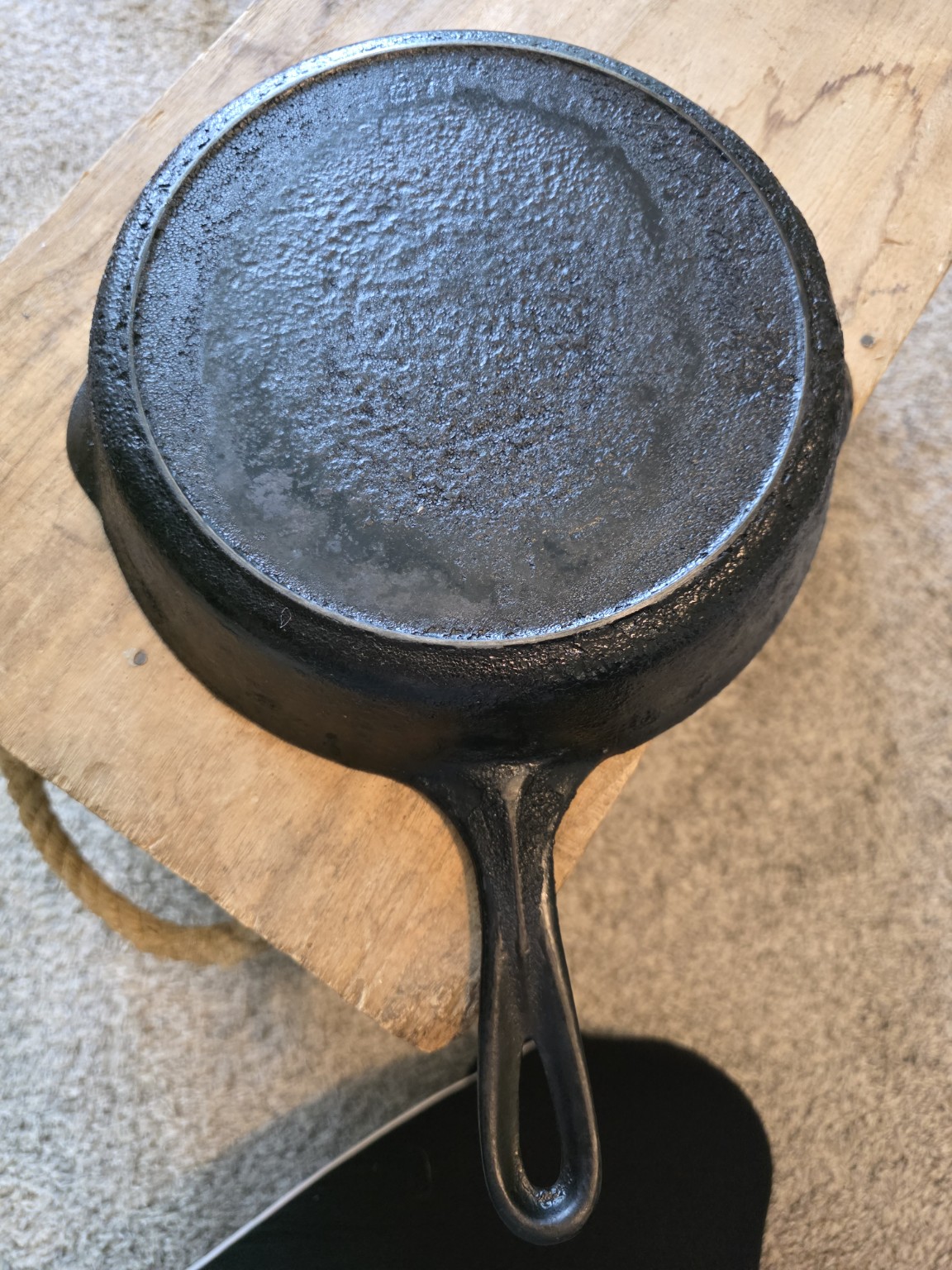
Identification starts before cleaning
A buried logo does not make a pan featureless. Overall proportions, handle geometry, heat rings, pour spouts, reinforcing ribs, and the placement of any visible number can narrow the field before restoration begins.
Write the first hypothesis down, but keep it provisional. Restoration should test the observation rather than turn a guess into a fact.
Use a reveal, not a reveal stunt
The satisfying moment is real: layers release and lettering appears. But the useful story includes what happened before and after that frame—how the pan was documented, which process was chosen, and whether hidden flaws emerged too.
- Photograph the mark area under raking light before treatment.
- Avoid grinding or polishing that reshapes the casting.
- Record every newly visible letter before seasoning darkens contrast.
- Correct the original identification publicly if the evidence changes it.
A $10 case study
RR-032, a heavily crusted No. 7 skillet found at a yard sale, anchors this lesson. Enough of the underside suggests Griswold to make the restoration compelling; enough remains hidden to make careful documentation essential.
Sources and further reading
These references support the identification, history, or restoration context used in this field note. Exact-piece observations come from the Rundstrom inventory record.
Have this question about your own piece?