Condition
What pitting means—and what restoration cannot undo
Rust can be removed. Lost iron cannot be put back. Here is how to read a pitted surface without confusing honest wear with failure.
Rundstrom field note · 6 min read
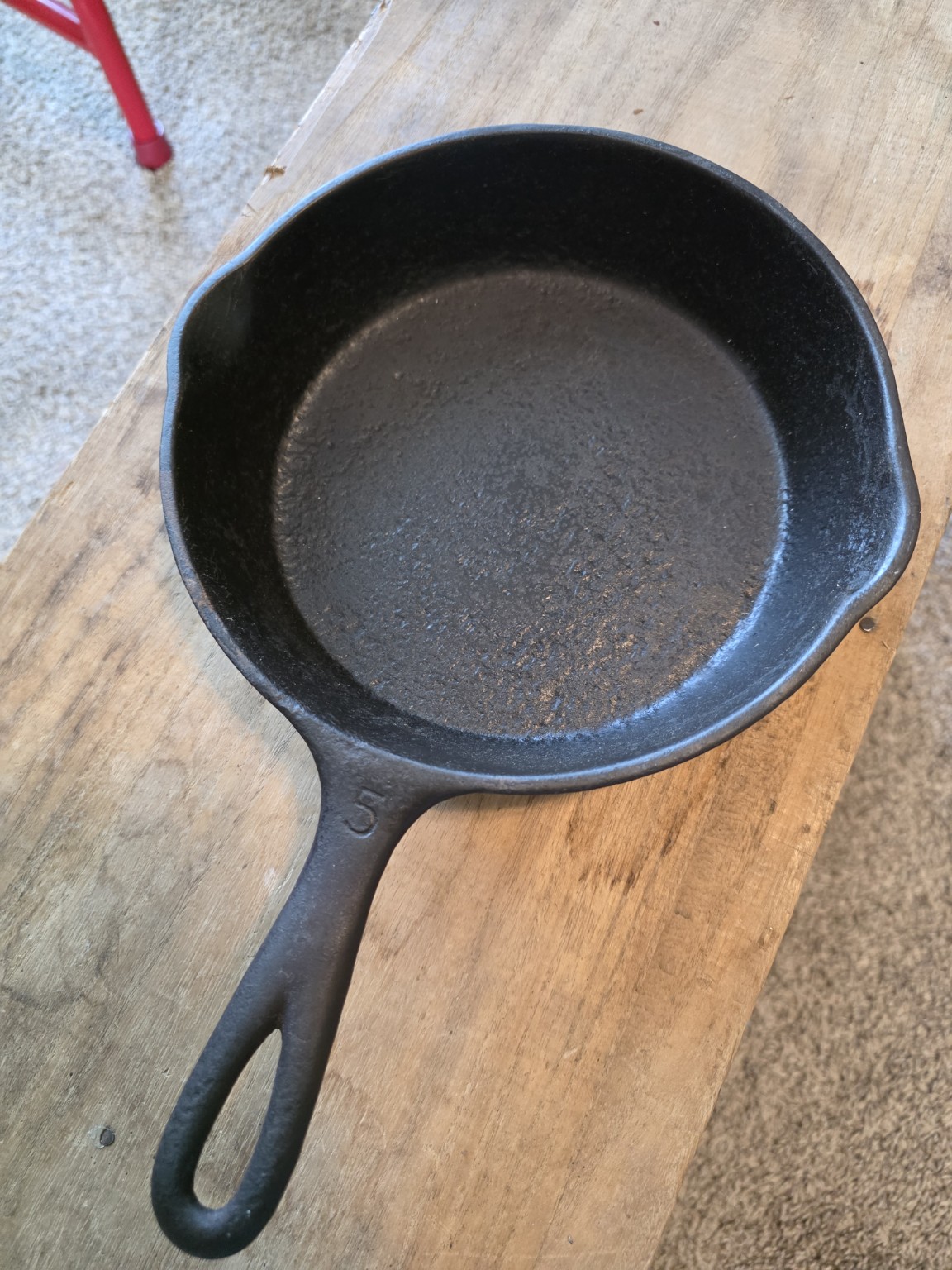
Pitting is missing metal
Pitting is the field of small cavities left when corrosion consumes part of the iron. Dirt, old seasoning, and surface rust sit on top of a pan; pitting is a change to the casting itself. Cleaning can reveal it more clearly, but cannot reverse it.
That distinction matters. A newly cleaned pan may look more dramatically pitted than it did under black buildup. The restoration did not create the pits—it made an existing condition visible.
Usable is not the same as flawless
Many pitted pieces can still be sound cookware. Seasoning darkens the surface and regular use may make it feel smoother, but honest condition language should never imply that seasoning fills deep cavities or rebuilds iron.
- Shallow, stable pitting may be largely cosmetic.
- Deep pits can trap residue and make a cooking surface harder to maintain.
- Cracks, severe thinning, or active scaling are different concerns and deserve separate evaluation.
How Rundstrom documents it
We photograph suspect areas before cleaning, after bare-iron inspection, and after seasoning. Light is angled across the surface so texture remains visible. A buyer or owner should be able to understand both the transformation and the limit of that transformation.
Sources and further reading
These references support the identification, history, or restoration context used in this field note. Exact-piece observations come from the Rundstrom inventory record.
Have this question about your own piece?