01
Record
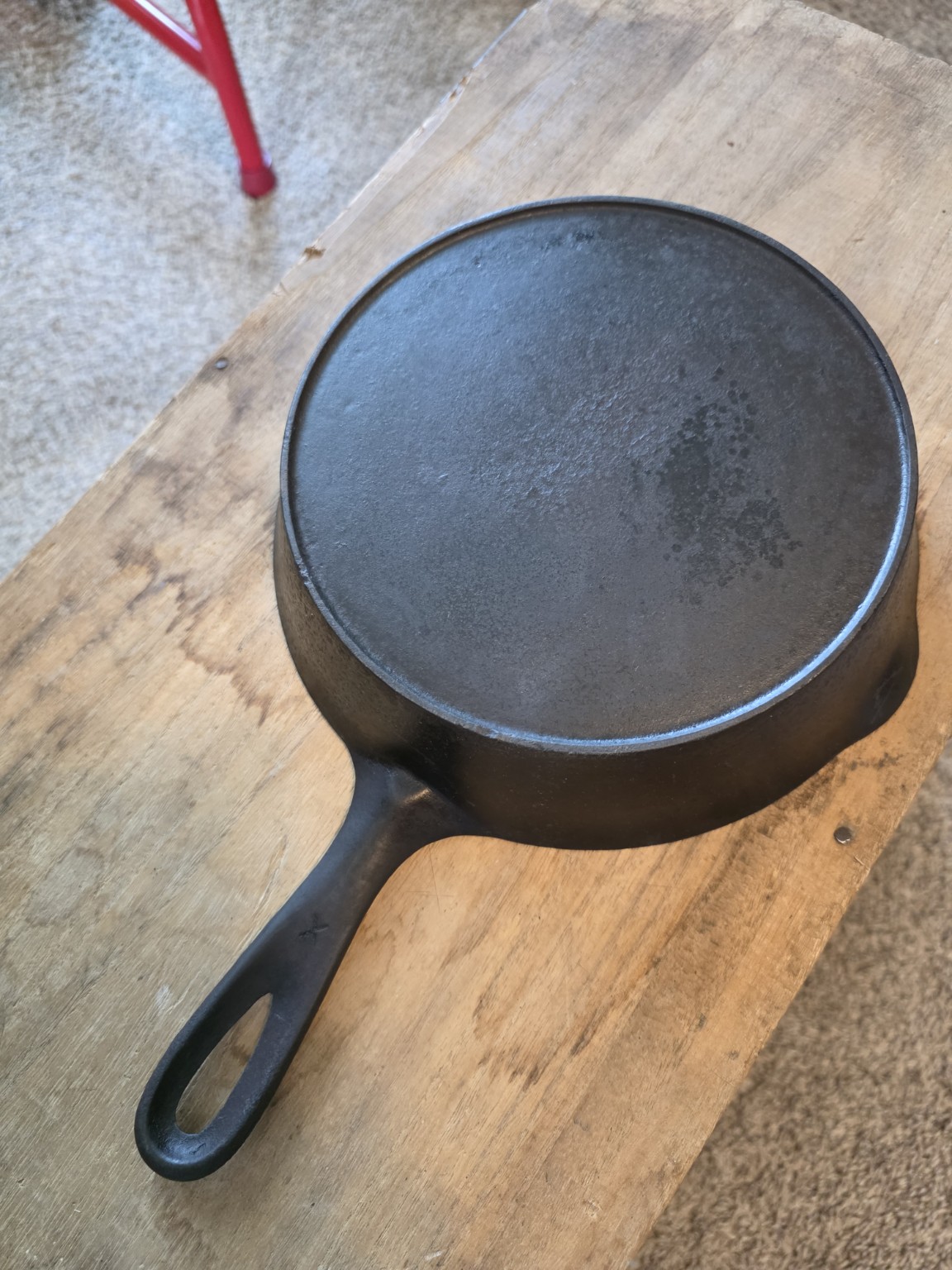
Untouched top, bottom, profile, handle, marks, damage, movement, hardware, and scale. The “before” is evidence, not decoration.
The Rundstrom standard
A dramatic reveal is satisfying. A repeatable process, conservative judgment, and an honest final record are what make the work trustworthy.
The method is selected for the casting, its condition, its collectible or sentimental significance, and the way its owner intends to use or preserve it.
Untouched top, bottom, profile, handle, marks, damage, movement, hardware, and scale. The “before” is evidence, not decoration.
Old organic buildup and rust are removed with an appropriate chemical or electrolytic process—without grinding away the original casting.
Bare iron is inspected for cracks, pitting, erosion, repairs, casting flaws, and newly legible marks. Surprises are documented.
The clean, dry casting receives thin, even seasoning appropriate to its intended use, with hardware handled separately when needed.
Final photographs repeat the original geometry. The record explains what changed, what remains, and what the next caretaker should know.
What restoration cannot promise
Cleaning may reveal damage that old buildup concealed. Pitting is missing metal. Warping is geometry. A crack is a structural fact. Seasoning protects sound iron; it does not undo any of those conditions.
That does not make every imperfect piece worthless. It means the right outcome depends on honest inspection, intended use, and disclosure.
Read the pitting guideThe line we will not cross
A power tool should not erase marks, texture, dimensions, or evidence simply to produce a more marketable shine.
Attribution, dates, and variants are stated at the confidence the evidence supports.
Known cracks, repairs, movement, pitting, hardware issues, or intended-display status belong in the record.
Unexpected conditions pause the work so the owner can understand and choose the next step.
Ready to discuss the piece?