
Cast iron condition
How to Check Cast Iron for Cracks Before You Buy: A Lesson in Getting Too Excited
Two cracks, one very excited buyer, and the inspection lesson I should have followed before bringing home an antique skillet.
By Kerri Rundstrom · Rundstrom Restorations · 7 min read
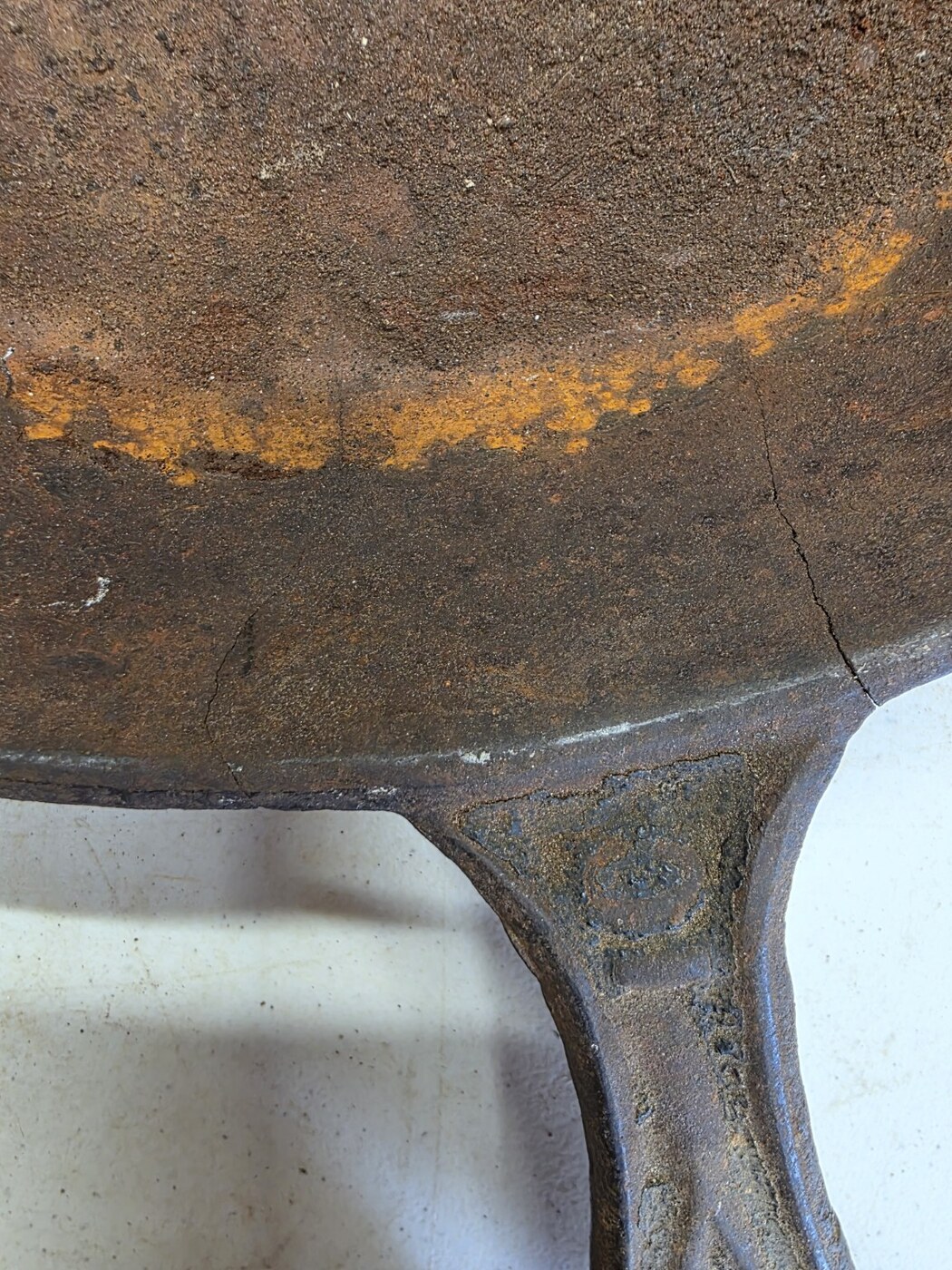
I bought an antique cast-iron skillet with two cracks because I was too busy being excited about how old it was.
Not one crack. Two. One on each side of the handle.
Apparently, the pan wanted to make sure I had options.
If you've read much of anything I've written about cast iron, you probably already know that I love the really old pieces. Give me something that looks like it could have been cooking supper in the 1800s, and I immediately want to know more about it.
Which is wonderful for curiosity. Occasionally less wonderful for remembering to inspect the actual pan.
The gate mark got my attention. The cracks should have kept it.
This particular skillet had a gate mark on the bottom, one of those raised scars left by the casting process. It was the kind of older iron I love finding, and I got excited.
Very excited, apparently, because I managed to overlook damage on both sides of the place where the handle joins the bowl.
I was thinking about its age and its history. I should have spent a little more time thinking about whether the handle and the rest of the skillet were committed to staying together.
I still find the piece interesting. That hasn't changed. What changed was what I could reasonably expect to do with it.
An old skillet with a crack is still old. It just isn't the sound cooking pan you may have been picturing when you picked it up.
So, if you're buying vintage cast iron, here's a lesson you can borrow from me without bringing home your own example: check the condition before you let the interesting marks talk you into the purchase.
The history will still be there after you've looked at the rim.
How to inspect a cast-iron skillet for cracks
You don't need a complicated setup for a first look. You need good light, a little patience, and a willingness to stop admiring the bottom long enough to examine everything else.
Start with the rim and follow it all the way around. Look down the inside and outside walls, particularly near the handle junction and pour spouts. Turn the pan over and examine the base, too. With a Dutch oven, include the areas around the bail-handle lugs.
A hairline crack can look like a thin scratch. If you spot a suspicious line inside a pan, check the same spot outside and across the rim. A line that continues through those surfaces deserves closer attention.
Change the angle of the light. Your phone flashlight can help here. One straight-on glance isn't always enough, especially when dark seasoning, rust, or crust is doing its best to blend everything together.
And please don't try to prove a crack is there by bending the handle, prying at the line, or heating the pan to see what happens. We are inspecting the damage, not auditioning for more of it.
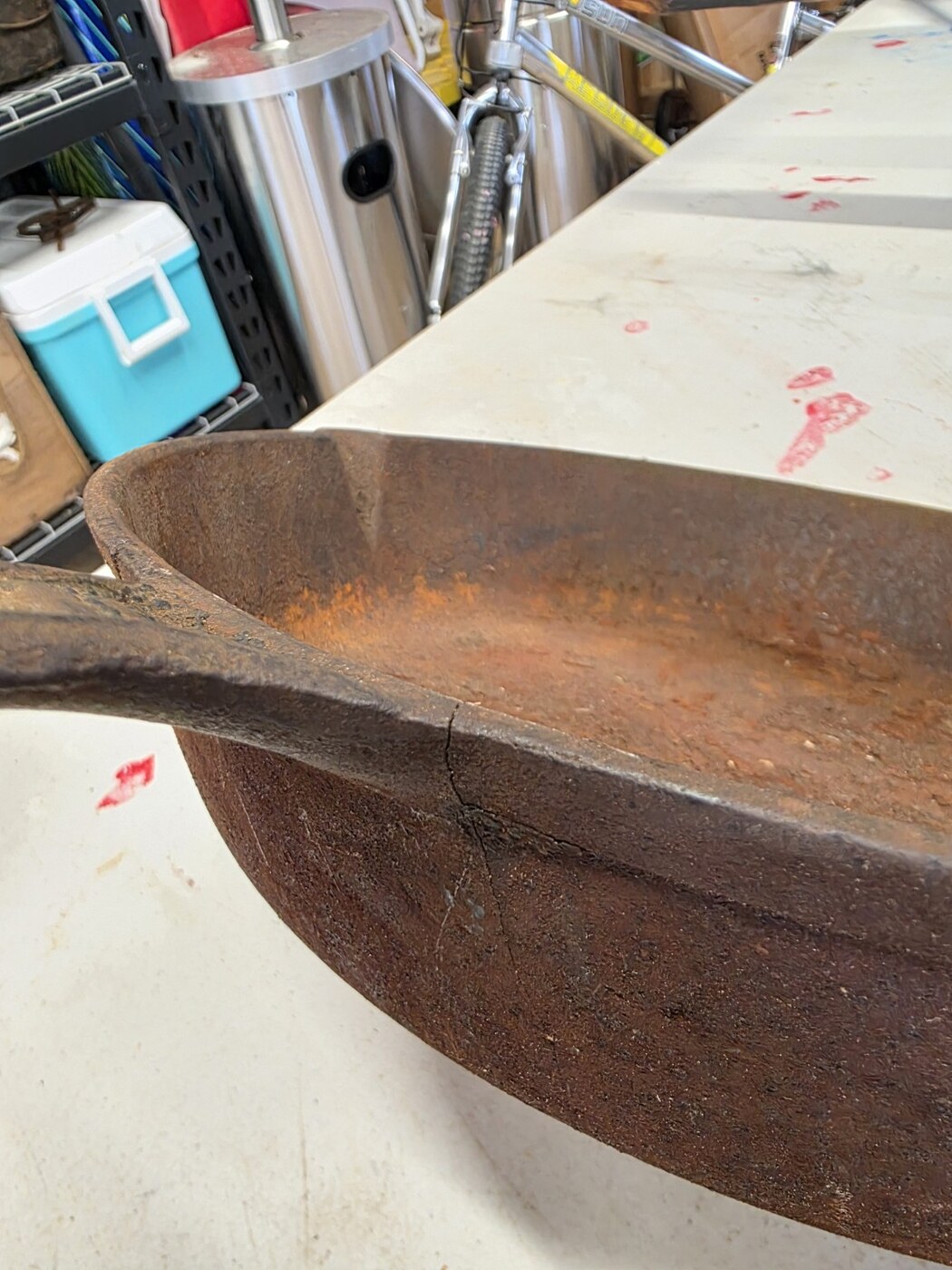
A quick inspection also has limits. Heavy buildup can hide damage. Buying a dirty piece means accepting that you may learn more once it's cleaned. A pan that looks promising at a yard sale still needs another inspection during restoration.
That was part of the approach with my Facebook Marketplace cast-iron haul: inspect before buying, then take a closer look at home. Getting excited doesn't replace either step. As demonstrated by yours truly.
A good cooking surface doesn't settle the question
The gate-marked skillet isn't my only reminder.
I also have a Birmingham Stove & Range No. 8 skillet with a wall crack. The cooking surface looked decent enough, but the damage in the sidewall changed the picture.
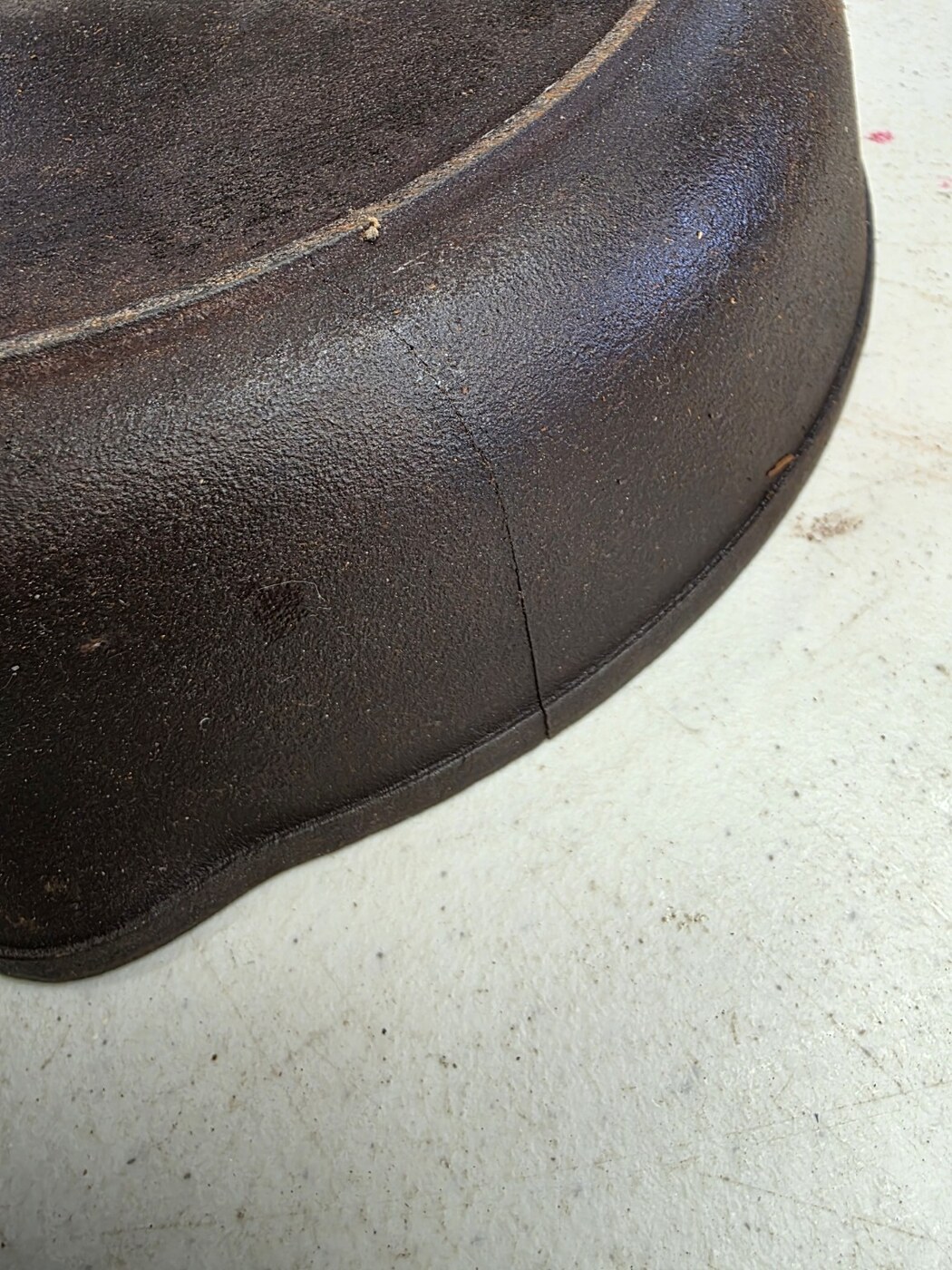
It is very easy to find the detail you were hoping for and mentally call the inspection finished. Smooth surface? Good. Vintage markings? Better. Interesting maker? Now we're getting somewhere.
Meanwhile, the crack is sitting there waiting for you to notice it.
That's why the whole piece matters. The cooking surface, walls, rim, bottom, and handles all belong to the same pan. You don't get to buy only the part you like.
What about the cast-iron ring test?
You may have heard that an intact pan rings when tapped and a cracked one makes a duller sound.
Treat that as a possible clue, not a guarantee. Shape, thickness, and buildup affect the sound. A nice ring doesn't clear a pan of damage, and a dull sound doesn't diagnose a crack all by itself.
I would much rather you take another careful look than let a promising noise talk you out of noticing a suspicious line.
Sometimes I buy the cracked piece anyway
Then there's my Griswold Dutch oven.
That one came home as part of a lot, and I knew it had a crack when I bought it. I didn't mind, because I wasn't buying that body with plans to put dinner in it.
It's a No. 10 Tite-Top Dutch oven body, with the Griswold markings still there underneath the rust. It also has a substantial crack running into the area around a bail-handle lug.
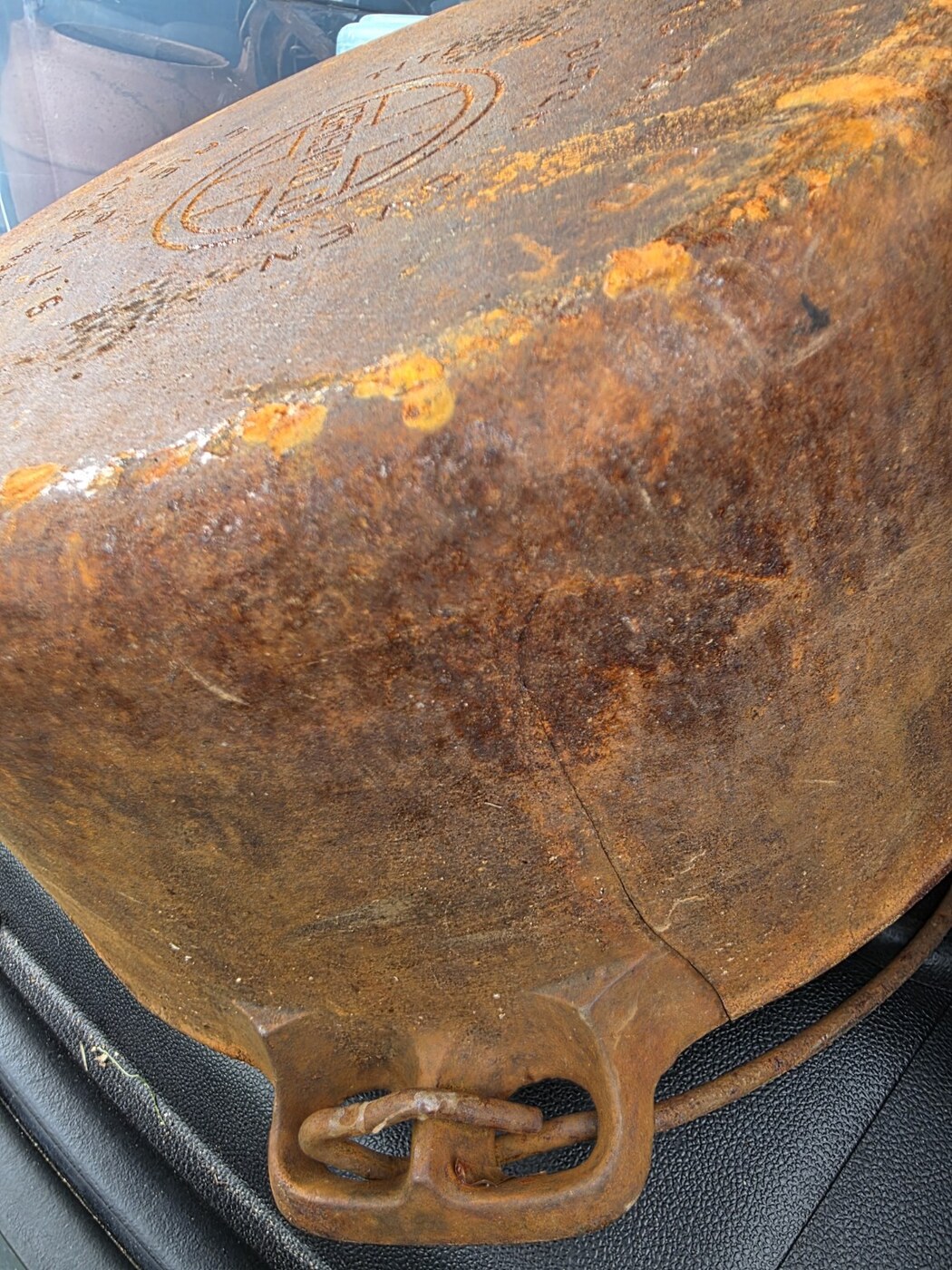
Even a cracked Griswold can make a lovely display piece. I can appreciate the casting, the markings, and the history without asking it to hold a pot full of hot food.
Knowing about the damage before buying meant I could decide whether I still wanted it for that purpose. Missing the damage meant I made that decision without all the information.
Those are two very different ways to bring home a cracked pan.
If you knowingly buy one for display, keep the damage clearly disclosed if it ever changes hands. A recognizable logo doesn't turn it back into functional cookware.
Can restoration fix cracked cast iron?
Cleaning and seasoning do not repair a structural crack. They may make the damage easier to see, but they don't join the iron back together.
Rust, buildup, pitting, and cracks aren't interchangeable problems. Removing the things sitting on a surface is different from reversing damage to the metal itself.
For Rundstrom Restorations, a confirmed cracked piece is excluded from cookware we offer as sound and ready to cook with. It may still have a place as a display or educational piece. It doesn't get a fresh coat of seasoning and a conveniently forgotten condition issue.
If you're wondering whether a cracked cast-iron pan is safe to cook with, my advice is to retire it from cooking. If you're unsure whether a line is a crack, set it aside until it can be assessed. Don't use a cooking trial as the test.
Old iron can wait thirty more seconds
I love the idea that a piece of cookware could have made it through more than a century and still have another chapter left. Sometimes that chapter is back on the stove. Sometimes it's on a shelf where you can appreciate it without pretending the damage isn't there.
I don't regret being interested in old iron. I do wish I'd given those two cracks the attention they deserved before buying that skillet.
So turn it over. Get excited about the gate mark. Then turn it back and check the rest of the pan.
It has waited this long. It can wait another thirty seconds while you look.
Have an old piece you're unsure about? Send me photographs and tell me what you've noticed. Include a full view and close-ups of any suspicious areas, inside and outside if possible. Here's how to photograph cast iron for identification if you need a starting point. Photographs can help us decide what to look at next, but they can't guarantee that a piece is crack-free.
Sources and further reading
Over to you
What part of this story reminded you of your own cast iron, and what would you like us to explore next? Tell us in the comments below.
From the workshop
Before you strip that skillet…
Get our free Cast-Iron Rescue Checklist: what to inspect, which problems need treatment, and when to stop before the pan pays for your enthusiasm. Sign up below for an immediate PDF download and future workshop updates. Email delivery is not active yet.
Join the conversation
Questions, comments, questionable skillets?
Ask a question or tell us what you're working on. Comments are reviewed before appearing. Please leave personal contact details out.
Loading comments…