
Cast iron stories
Buying Vintage Cast Iron on Facebook Marketplace: I Came Home With the Whole Lot
A top-only Marketplace listing, a fair bundle deal, and a table full of old iron with another chapter left in it.
By Kerri Rundstrom · Rundstrom Restorations · 7 min read
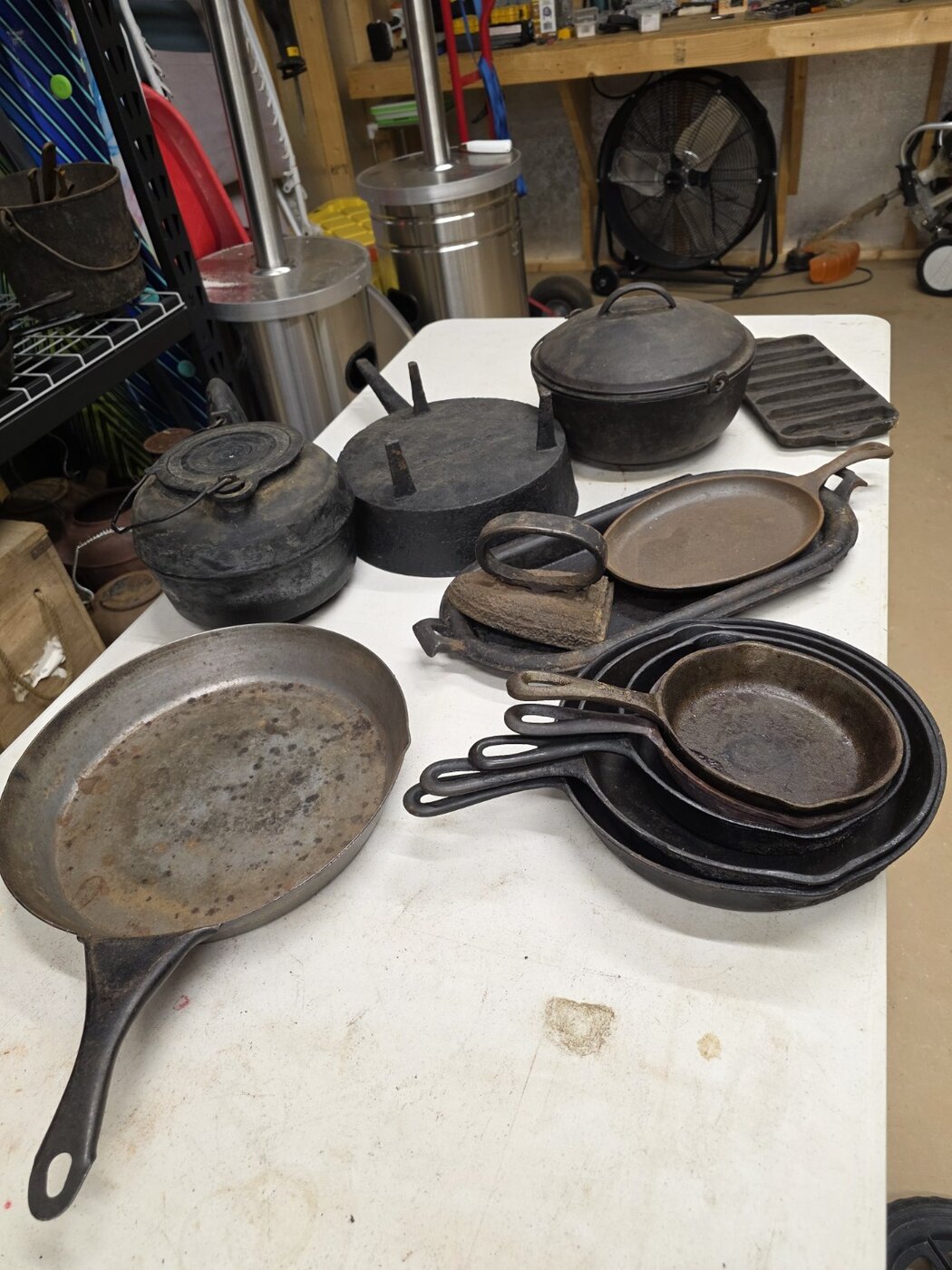
The first thing I liked about this Marketplace listing was that nobody had photographed the bottoms of the pans.
Which is a slightly odd thing to like, considering the bottoms were exactly what I wanted to see.
But when you're hunting for older cast iron, a listing full of top-only pictures can be promising. It made me wonder whether these folks knew to look underneath for the clues that help identify a piece. There might be more here than the pictures were telling me.
There were skillets, a kettle, a Dutch oven, a corn-stick pan, a long shallow pan, a sad iron, and a three-legged spider skillet. Everything had its own asking price. Everything looked like it had some cleaning in its future.
My kind of listing.
I started looking more closely at the handles, the shapes, and the cooking surfaces. Several pieces looked like vintage American iron. I couldn't tell you exactly who made every pan, but I could tell you I wanted to turn them over.
Rather than pick out two or three, I messaged the seller and asked whether she'd consider a deal for the whole collection.
She would.
Well, then. That was worth putting on shoes for.
More interesting in person
For a bundle that size, I wasn't going to buy entirely from pictures. I wanted to see the iron, check for cracks, and find out whether the backs supported what I thought I was seeing from the tops.
I also asked them to bring out any other cast iron they had. If we were talking about buying the whole lot, we might as well see the whole lot.
Once I got there, I did a quick inspection. Cracks first, interesting marks second. I love old iron, but a promising pan still needs to be a sound purchase.
Then came the fun part: flipping things over.
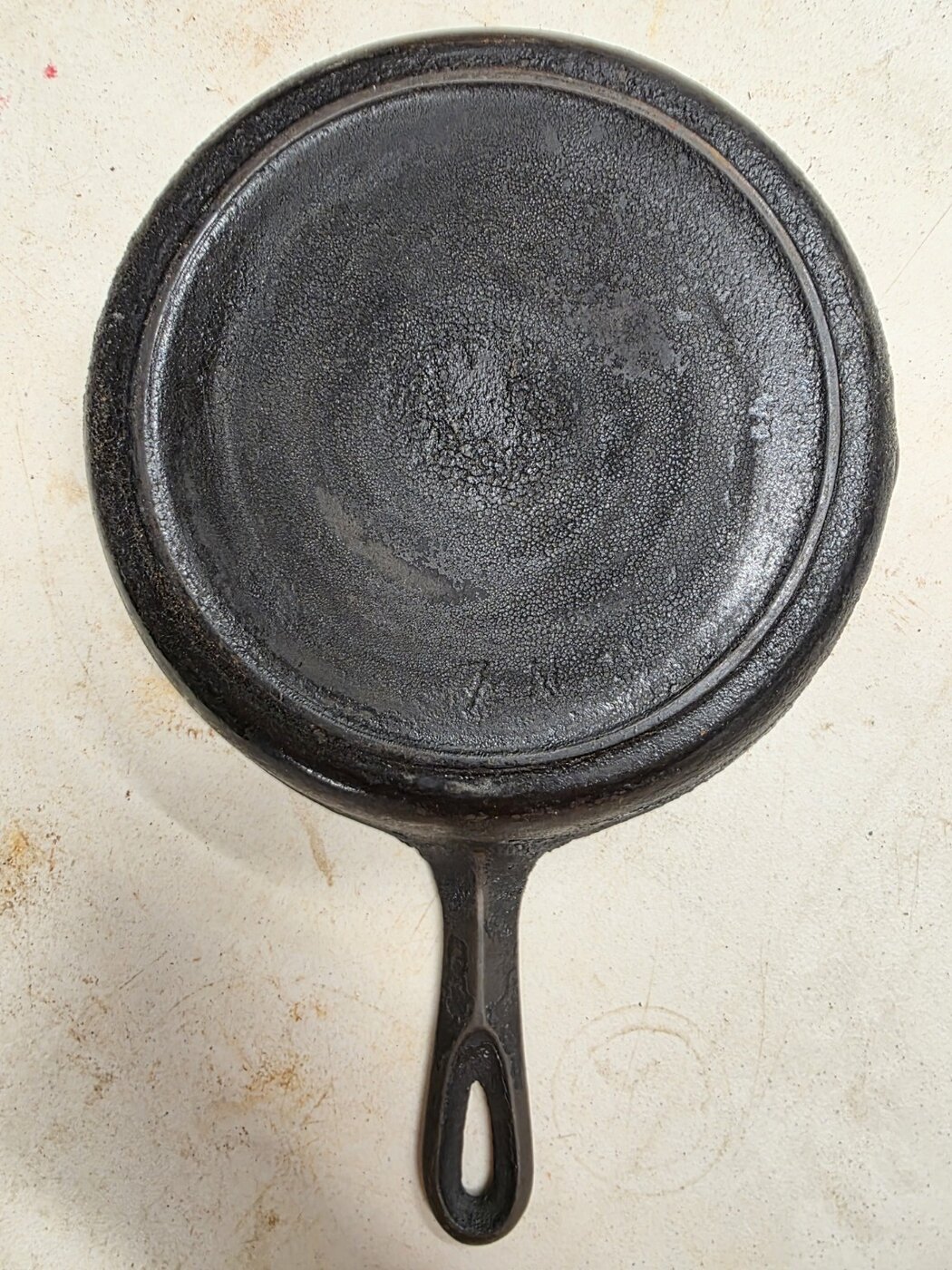
There were unbroken heat rings on some of the skillets, the raised circles around the bottoms, along with numbers and other markings. Combined with the handles and the smooth-looking cooking surfaces, those details supported my impression that much of this was older American cookware.
I wasn't standing there trying to assign every skillet a maker, a decade, and its own biography. I wanted to know whether this was the sort of lot I thought it was.
It was looking good.
And then there were the gate marks.
Those raised scars on the bottoms were some of the most exciting things in the collection for me. We eventually found three gate-marked pieces that look likely to date to the nineteenth century. Their exact ages and makers still need more work, but I was already very interested.
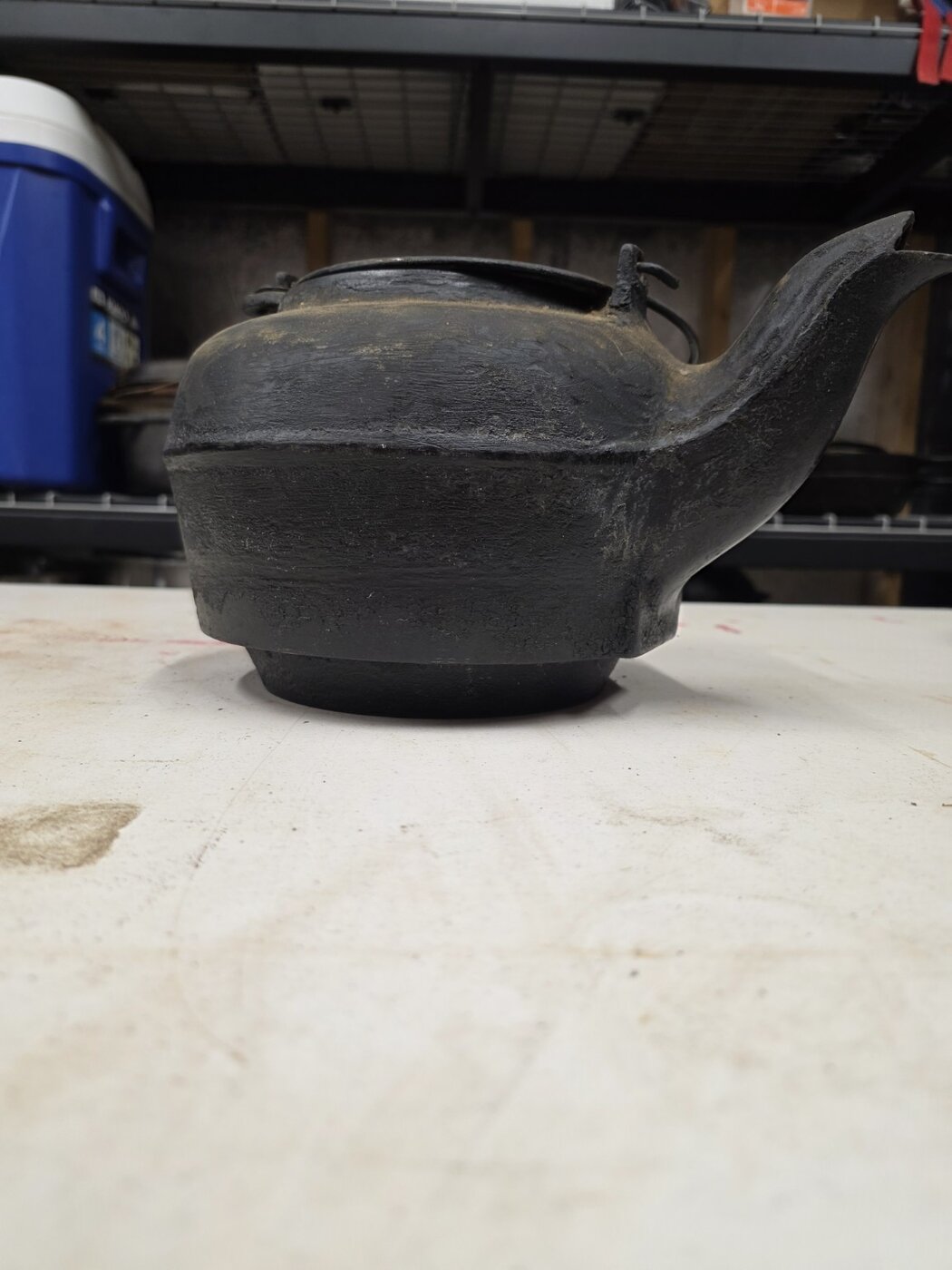
The kettle caught my attention, too. It was bigger than some of the kettles I own, yet surprisingly light in my hands. Some of my smaller ones are much thicker and heavier. This one had that thinner casting that made me want to know more about it.
That didn't give me a date all by itself. It did give me another reason to be happy I'd made the trip.
It wasn't just about getting a deal
As we talked, I learned that the seller actually did know some of the iron was older and worth more. The missing bottom pictures hadn't told the whole story about her knowledge, either.
What she wanted was for it to go to a good home, to somebody who would restore it and use it properly.
I was happy to oblige.
That part mattered to me. These weren't just objects I planned to clean up and move along as quickly as possible. Restoring them is a big part of why I wanted them in the first place. I like finding out what's underneath the rust and buildup, figuring out what a piece is, and giving it a chance to be useful again.
We settled on a fair price for the collection, below what everything would have cost individually. She could move the lot in one transaction, and I could take home a variety of pieces worth spending time on.
She also included four additional pieces: two No. 3 skillets, a little shallow oval handled pan, and what turned out to be a carbon-steel pan.
One of the little No. 3s was vintage American iron. The other was made in China. The oval pan looks older, but we haven't finished identifying it yet.
The carbon steel was a surprise of its own. Apparently I had managed to buy a cast-iron haul with a guest appearance.
The part where everything takes over the table
Once I got home, I could spread the collection out in the shop instead of trying to look through a bin in the back of the car.
That's when I started taking the individual photographs and looking more closely at what I'd brought home.
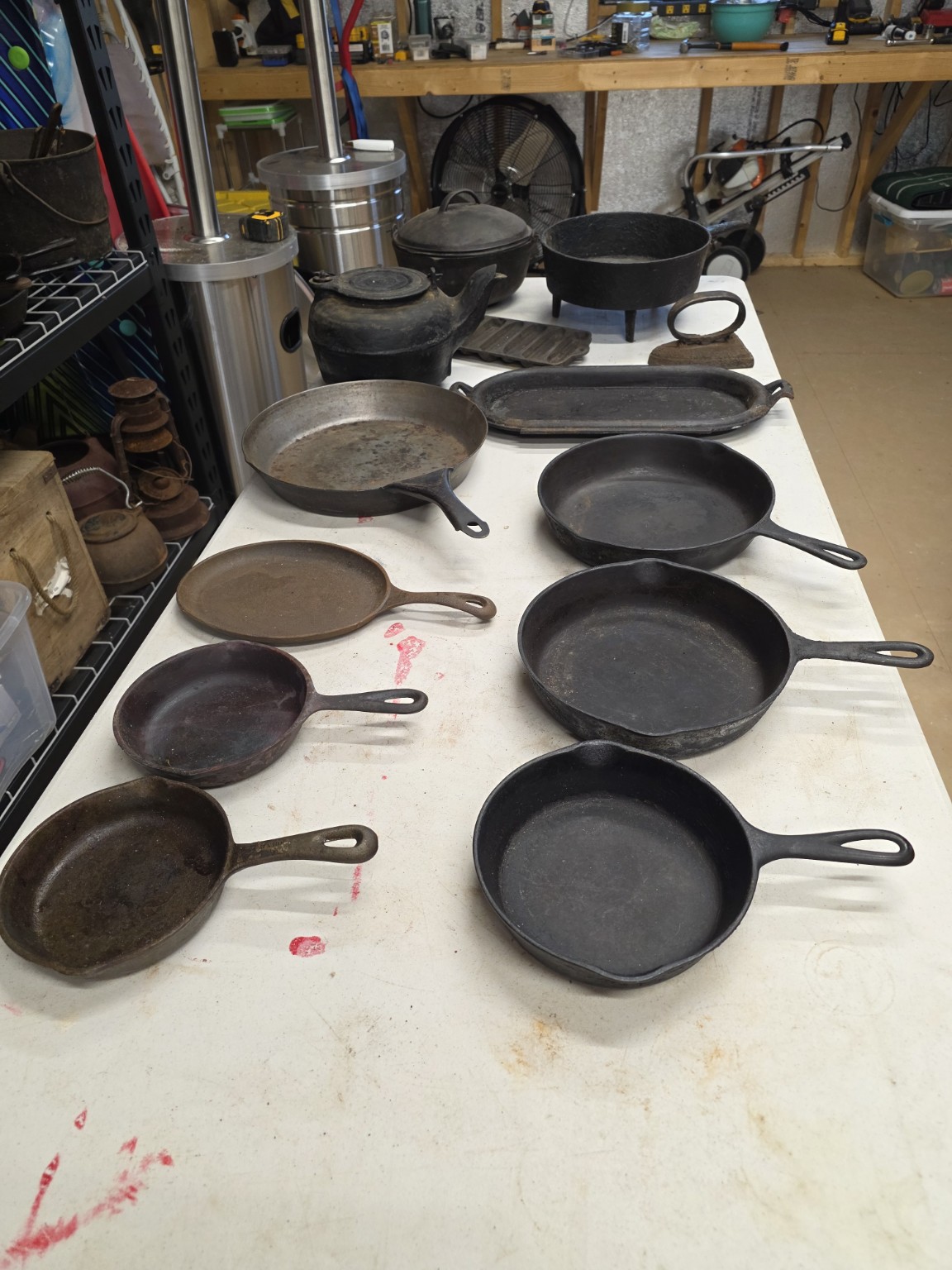
Several skillets appear to be Birmingham Stove & Range, often shortened to BSR. I hadn't verified that at pickup. At the seller's place, I'd seen enough to feel good about the collection as a whole. At home, I had time to start sorting out the individual pieces.
The difference is worth remembering if you're shopping from the same sort of pictures. You can recognize a promising lot without identifying every single thing in it. You still need to turn the pieces over and inspect them before enthusiasm makes all your purchasing decisions for you.
Numbers, heat rings, handles, and surfaces work together. A number on the bottom isn't automatically a dollar sign. It's another clue to follow.
And buildup can hide quite a bit. Sometimes it's a maker's mark waiting to be uncovered. Sometimes it's damage you'd rather have known about sooner. That's why the closer inspection continues after the quick buying inspection, and again as each piece gets cleaned.
My favorites from this lot are still those three gate-marked pieces.
They may not be the biggest collector prizes. That doesn't bother me much. The older, the better, as far as my personal interest goes. I love the idea that something could have been made in the 1800s, passed through all those years, and still be sitting on my table with another chapter left in it.
Somebody cooked with this. Probably several somebodies. And now I get to find out what it looks like underneath everything time has left on it.
That is a lot more interesting to me than whether it has the logo everybody is looking for.
If you're the one selling the pans
Since the missing bottom photographs are what started this whole story, let me give the other side of that advice.
If you're selling your own cast iron, turn it over and do at least a quick Google search of the name, numbers, or markings on the bottom. Take a clear photograph while you're there.
You may learn that you have something more interesting than you thought. You may also save yourself a dozen messages from people asking for the exact same picture.
A search won't settle every identification, and an ambitious asking price online isn't proof of what your pan will sell for. But it's a useful place to start. If you're not sure which details to photograph, here's what I like to see when identifying cast iron.
In this case, the seller knew more than the photographs suggested, and she cared about where the pieces were going. We found an arrangement that worked for both of us.
Now for my favorite part
Everything is getting restored.
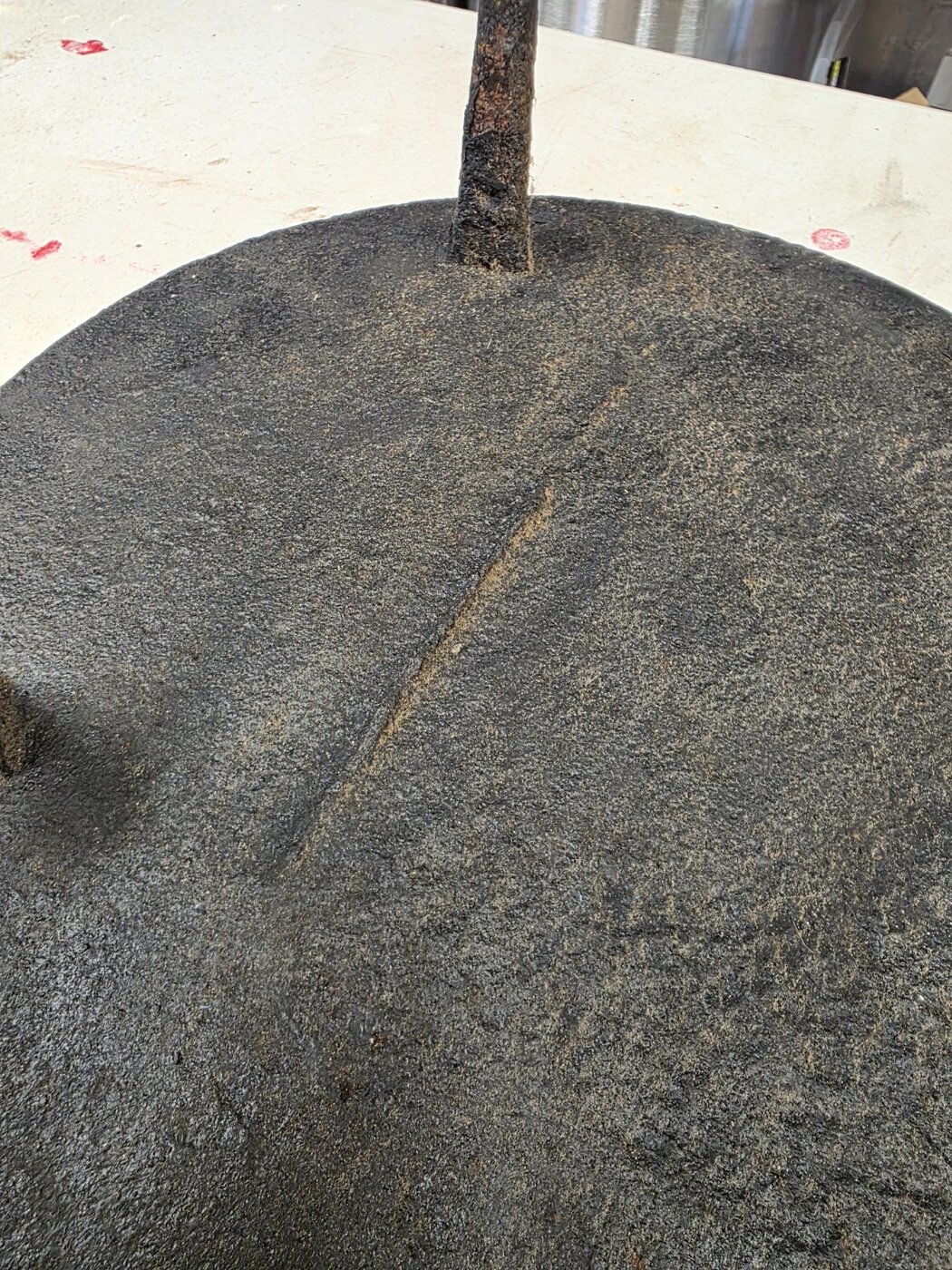
The photographs you're seeing here are how it came home. I'll share more as the pieces get cleaned and we can see what we're actually working with. Some will reveal clearer marks. Some will have pitting that cleaning can't undo. And some may keep a little mystery even after they're clean.
I'm especially looking forward to seeing those oldest pieces again without all the buildup.
I went to look at a Marketplace listing because the pictures made me curious. I came home with a table full of projects and a seller who knew her cookware was going to somebody excited to take care of it.
Now I have to resist the urge to start with everything at once.
Wish me luck with that.
Have a piece of old cast iron you'd like to use again? Send me a few photographs and tell me about it. I'd be glad to take a look.
From my workshop
Affiliate disclosure: These are affiliate links. If you buy through them, I may earn a commission at no extra cost to you. As an Amazon Associate I earn from qualifying purchases.
- Nylon scrubbing / drill brush — The nylon brush I use for stubborn buildup during cleanup. It has worked well for me; inspection and a light touch still matter.
Over to you
What part of this story reminded you of your own cast iron, and what would you like us to explore next? Tell us in the comments below.
From the workshop
Before you strip that skillet…
Get our free Cast-Iron Rescue Checklist: what to inspect, which problems need treatment, and when to stop before the pan pays for your enthusiasm. Sign up below for an immediate PDF download and future workshop updates. Email delivery is not active yet.
Join the conversation
Questions, comments, questionable skillets?
Ask a question or tell us what you're working on. Comments are reviewed before appearing. Please leave personal contact details out.
Loading comments…