
Restoration myths
Cast Iron Restoration Myths: Please Step Away From the Bonfire
Self-clean ovens, backyard fires, vinegar marathons, and other questionable favors people do for their skillets. Let's separate removing the crud from preserving the iron.
By Kerri Rundstrom · Rundstrom Restorations · 6 min read
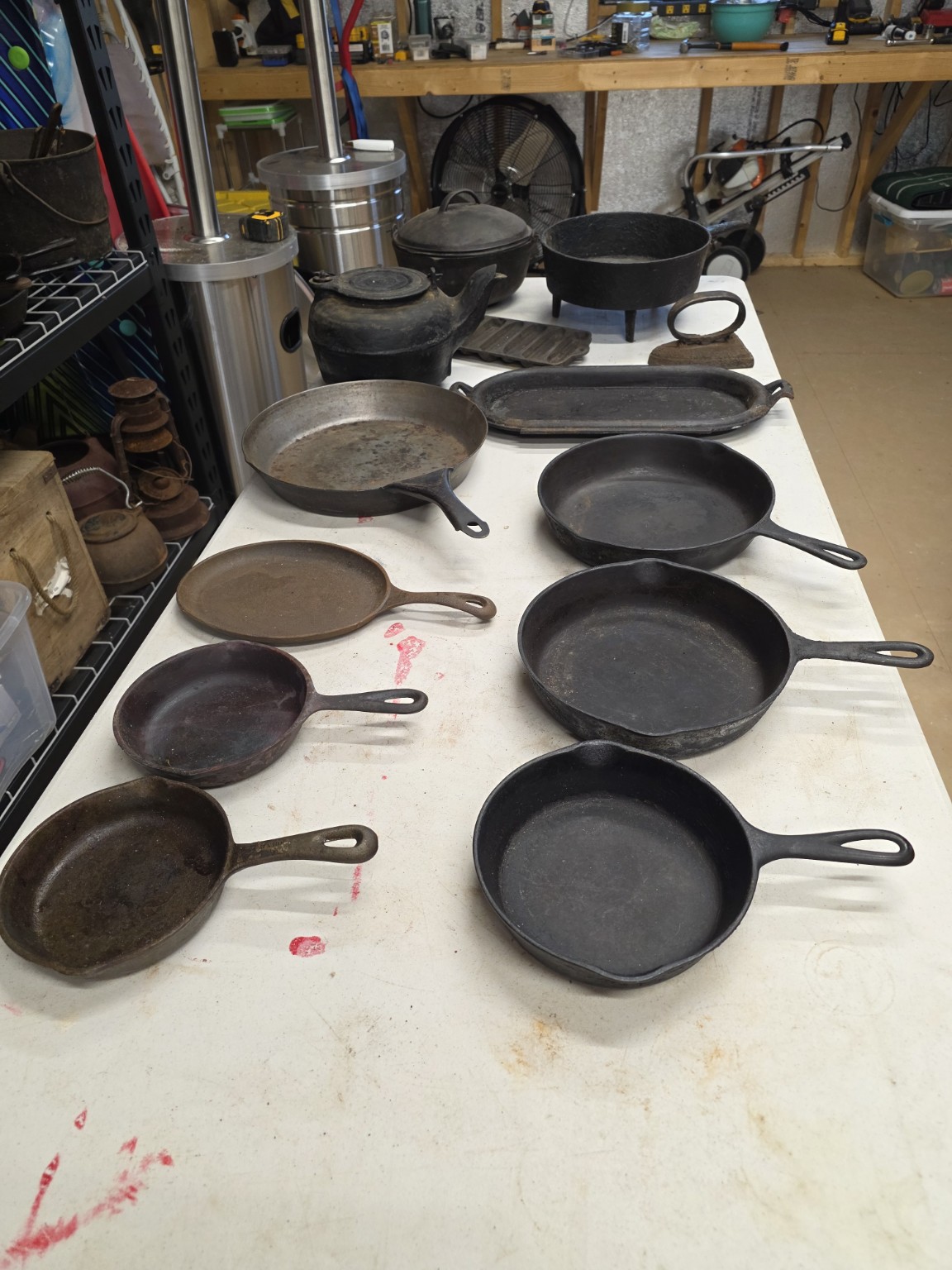
Somewhere on the internet, someone is looking at a hundred-year-old skillet and thinking, ‘You know what this needs? A fire.’
The skillet has survived generations of cooking, neglect, and questionable storage decisions. Apparently, that qualifies it for one more trial by somebody with a backyard and confidence.
I love restoring cast iron. I am considerably less enthusiastic about advice that turns restoration into a competition to see who can remove the most material before supper.
So let's bust a few myths. Starting with a distinction that deserves more attention: a method can remove the grime and still be a terrible favor to the pan underneath it.
Myth: ‘The self-clean cycle is a safe shortcut.’
Verdict: grime removal is plausible. Safe preservation is the part that doesn't hold up.
A self-clean cycle can burn off buildup, but overheating can also warp or crack cast iron—even with slow heating and cooling. Older, thinner castings are particularly worth protecting. An intact pan afterward doesn't make the method risk-free.
‘I've done it and mine was fine’ is an account of one pan's experience. I am glad for that pan. I would still prefer not to make your grandmother's skillet the next contestant.
Here, the self-clean button stays out of the restoration plan.
Myth: ‘Throw it in a fire. Cast iron can take it.’
Verdict: the fire may remove the crust. It may also leave you with damage you cannot scrub away.
Uncontrolled heat can cause warping, cracking, or permanent heat damage. Cast iron is brittle; surviving decades of cooking doesn't make it immune to overheating or thermal shock.
A campfire is lovely for sitting around and discussing your questionable purchases. I do not consider it an appropriate place to put the purchases themselves.
The restoration goal is to bring the pan back with its history intact. Adding ‘survived a backyard incident’ to that history is optional, and we decline.
Myth: ‘Vinegar only eats the rust.’
Verdict: vinegar has no such manners.
Vinegar's acidity can remove rust, but prolonged exposure can also erode sound iron. The Cast Iron Collector recommends checking diluted vinegar treatments at 30-minute intervals, with much shorter exposure for full-strength vinegar. That is monitoring guidance, not permission to forget the pan.
There is no universal 30-minute or one-hour grace period. Concentration, temperature, and the condition of the surface matter. Exposed iron doesn't wait for a timer before acid can react with it.
A little flash rust doesn't automatically call for a bath. Lodge's rust-restoration guidance starts with scrubbing, washing, and prompt drying—not an obligatory vinegar soak. We assess light rust first and avoid vinegar whenever a gentler approach will do the job.
If acid treatment is warranted, the aim is the shortest effective exposure, followed by thorough rinsing and drying. ‘I'll come back tomorrow’ is a calendar entry, not a restoration technique.
Truth: lye and electrolysis have different jobs
For suitable bare cast iron, properly managed lye cleaning and correctly configured electrolysis are established ways to remove unwanted material while protecting the original iron surface. They are the preservation methods our approach is built around.
Lye breaks down greasy buildup and old seasoning. It does not remove rust. Asking it to do both is like asking the dishwasher to fix your transmission: ambitious, but the job description is wrong.
Electrolysis treats rust and loosens buildup. Correct polarity matters: the pan belongs on the negative side. A tank is a tool with a proper setup, not a bucket that becomes scientifically qualified because somebody attached wires.
Neither process eliminates the need for inspection and careful cleanup. Both should serve the pan's condition, rather than become a reason to stop paying attention.
And ‘gentle on suitable iron’ does not mean ‘harmless to people.’ Lye is caustic and requires skin and eye protection. Electrolysis requires electrical precautions and ventilation because it produces flammable hydrogen. Respecting the equipment is part of using the method safely.
This discussion concerns bare cast iron. Enamel, plating, aluminum parts, and wooden handles change the assessment. They do not automatically get the skillet treatment just because they arrived attached to a skillet.
Myth: ‘If it isn't shiny and smooth, keep grinding.’
Verdict: the pan is allowed to look its age.
Grinding and blasting can permanently change the original surface. Pitting is iron already lost to corrosion; removing surrounding metal does not restore what disappeared.
There is a difference between cleaning a piece and giving it a new face because the old one wasn't sufficiently photogenic.
At Rundstrom Restorations, we preserve markings, casting character, and the surface that remains. We are not trying to make every antique look like it came off a shelf yesterday. Clean, functional where condition allows, and honestly represented is the goal.
Some pieces will still have stains, utensil marks, or pits. Those deserve an explanation, not an aggressive attempt to erase the evidence.
Myth: ‘Restoration can fix whatever is underneath.’
Verdict: restoration is not a time machine.
Cleaning can reveal cracks and corrosion that buildup concealed. It cannot put missing iron back, straighten every warped pan, or make a cracked piece sound again. Seasoning is not a structural repair.
If you've read my lesson in checking cast iron for cracks, you already know that I am perfectly capable of getting excited about a pan before noticing what should have slowed me down.
That is exactly why inspection happens before restoration and again as the surface is uncovered. A recognizable logo does not get to overrule a crack.
Coming up: some very unglamorous test subjects
We plan to investigate some destructive restoration advice in future articles, with before-and-after documentation and an honest look at what actually changes.
The test subjects will be low-value pans selected for the purpose. No pristine collectibles. No family heirlooms. No beautiful antique sacrificed because somebody wanted a dramatic thumbnail.
And one test pan surviving won't prove a method safe for every pan. We will report what we observe, including the limits of what a small experiment can tell us.
Curiosity is welcome. Your great-grandmother's skillet does not have to fund it.
Let us handle the restoration. You can keep the skillet.
If you have rusty, crusty, neglected cast iron, you do not need to start with a fire, a grinder, or an overnight vinegar commitment.
Our restoration service begins with photographs and a condition assessment. We select appropriate preservation methods, avoid unnecessary acid exposure, document the work, and explain the limits before promising a result.
Request a cast-iron restoration assessment. Send the cooking surface, underside, side profile, and close-ups of any damage or markings, along with whatever history you know.
We want to remove what doesn't belong there and preserve what does. The iron has already done enough surviving.
From my workshop
Affiliate disclosure: These are affiliate links. If you buy through them, I may earn a commission at no extra cost to you. As an Amazon Associate I earn from qualifying purchases.
- Nylon scrubbing / drill brush — The nylon brush I use for stubborn buildup during cleanup. It has worked well for me; inspection and a light touch still matter.
Sources and further reading
- The Cast Iron Collector: cleaning methods, vinegar exposure, and heat/abrasive caveats
- The Cast Iron Collector: lye cleaning and handling precautions
- The Cast Iron Collector: electrolysis setup, ventilation, and material limitations
- The Cast Iron Collector: damage, warping, cracks, and pitting
- Lodge Cast Iron: restoring and seasoning rusty cast iron
Over to you
What part of this story reminded you of your own cast iron, and what would you like us to explore next? Tell us in the comments below.
From the workshop
Before you strip that skillet…
Get our free Cast-Iron Rescue Checklist: what to inspect, which problems need treatment, and when to stop before the pan pays for your enthusiasm. Sign up below for an immediate PDF download and future workshop updates. Email delivery is not active yet.
Join the conversation
Questions, comments, questionable skillets?
Ask a question or tell us what you're working on. Comments are reviewed before appearing. Please leave personal contact details out.
Loading comments…