
Cast iron collecting
Cast Iron Kettles, Corn Pans, Griddles, and Lids: Beyond the Skillet
I love a good skillet. I also want useful answers for the pieces that don't look like one.
By Kerri Rundstrom · Rundstrom Restorations · 3 min read
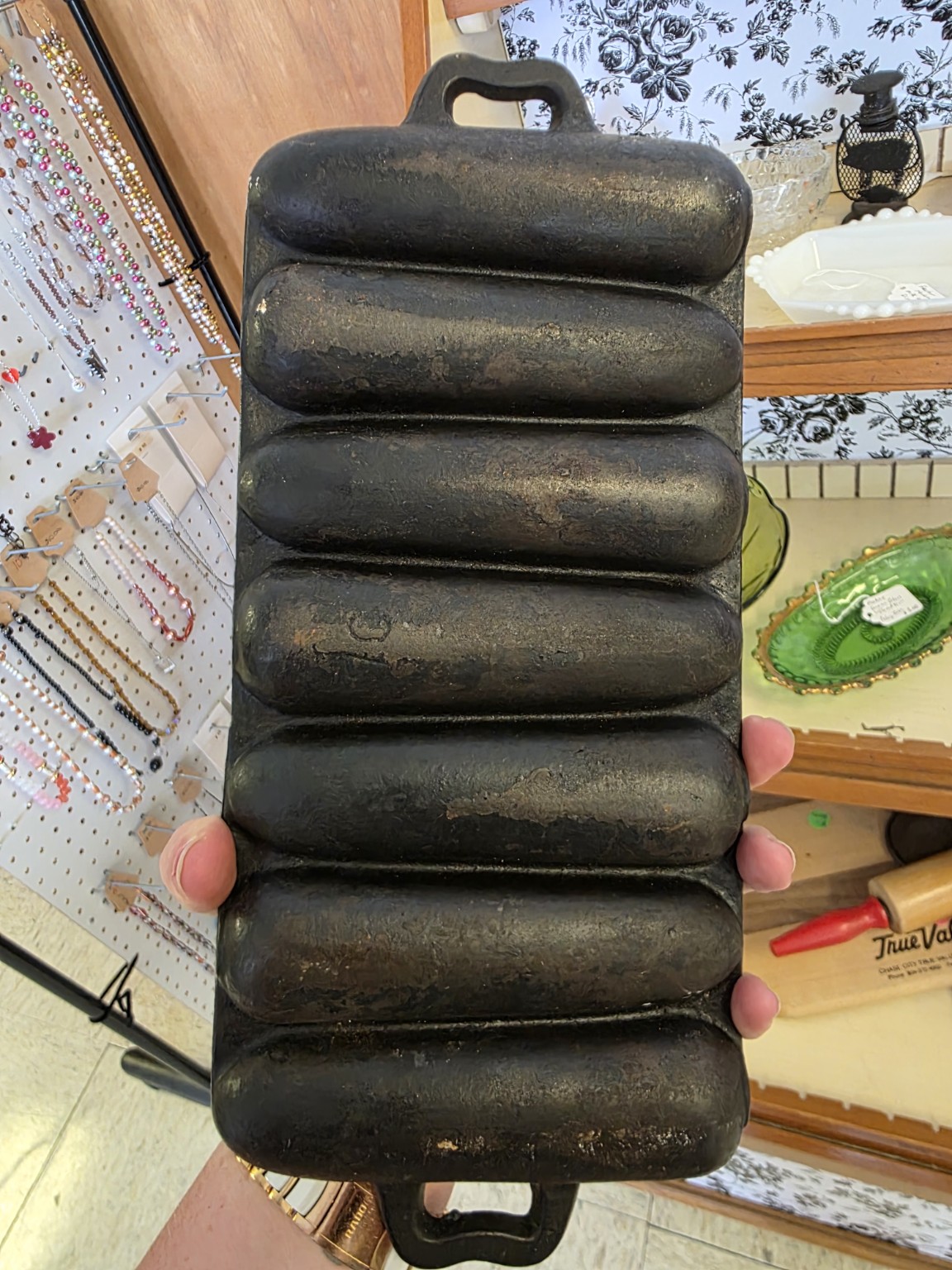
Spend a little time looking up vintage cast iron and you'll find plenty to read about skillets. Logos, sizes, heat rings, dates. There is a lot of useful information out there, and I've learned from it.
Then pick up an old kettle or a corn-stick pan and ask a specific question. Suddenly the answer can be a little harder to find.
That gap is part of why I want Rundstrom Restorations to become the resource I wished I had while learning. I love skillets. I just don't think everything else should have to wait politely in the corner.
A different shape brings different questions
A kettle makes you look inside a cavity, around a spout, and at the way its hardware is attached. A corn-stick pan asks you to examine narrow, textured wells. A lid may have clues underneath that are just as useful as anything on the pot.
A guide that only shows a skillet's flat cooking surface leaves quite a bit unanswered for those pieces. Where is the mark? What measurements matter? Is that lid actually a good fit? Which parts are iron, and which parts might be another material?
Those are practical questions, whether you're collecting, buying, restoring, or trying to understand something that belonged to your family.
Kettles need more than a pretty outside photograph
I have several cast-iron kettles, and I enjoy them far more than their complicated little interiors have earned. A side view can be beautiful. It won't tell you much about what's happening inside.
For identification and a restoration assessment, include the base, interior, lid, spout, and hardware. Mixed-material parts matter when deciding on treatment. Looking old doesn't tell us what every component is made from.
I want the eventual kettle guides to show those decisions and the real results, not skip straight from a rusty exterior to a general instruction to clean it. The details are where the useful information lives.
Corn pans and lids deserve a closer look, too
With a corn-stick or muffin pan, show the wells and the underside. The cavity arrangement, handles, and markings can help narrow an identification. Don't assume that every pan with seven little corn shapes came from the same maker.
For a lid, show both sides, the rim, handle, and any numbers. If you have a pot it seems to fit, photograph them together and describe the fit. A lid and a pot sharing a number is a clue to investigate, not a wedding certificate.
Here's how to photograph cast iron for identification if you're wondering where to begin. Adapt the views to the piece rather than trying to make a kettle behave like a frying pan.
The guides should grow from the actual work
I want to cover the details that get brushed past: inspecting narrow wells, drying textured pieces, treating removable hardware appropriately, and understanding rust inside kettles and other cavities.
Those process stories will follow the restorations as the outcomes become clear. I won't write a triumphant ending for a piece that's still in the middle of its treatment. The interesting discoveries, stubborn damage, and occasional corrected guesses belong in the finished story.
My Marketplace haul is a good example of why the variety matters to me. The skillets were only part of what made the collection worth bringing home.
If you have an unfamiliar piece you'd like restored, send me photographs and tell me about it. An odd shape is a reason to look more closely. It's often where the best questions start.
From my workshop
Affiliate disclosure: These are affiliate links. If you buy through them, I may earn a commission at no extra cost to you. As an Amazon Associate I earn from qualifying purchases.
- Makeup sponges for applying seasoning — I use these to reach small lettering and handle details when applying seasoning.
Sources and further reading
Over to you
Which would you like us to cover next: kettles, corn pans, griddles, or lids? Tell us in the comments below.
From the workshop
Before you strip that skillet…
Get our free Cast-Iron Rescue Checklist: what to inspect, which problems need treatment, and when to stop before the pan pays for your enthusiasm. Sign up below for an immediate PDF download and future workshop updates. Email delivery is not active yet.
Join the conversation
Questions, comments, questionable skillets?
Ask a question or tell us what you're working on. Comments are reviewed before appearing. Please leave personal contact details out.
Loading comments…