
Everyday cast iron
Good Cast Iron Doesn't Need a Famous Name
I love a collectible skillet. I also believe making supper shouldn't require a collector's budget.
By Kerri Rundstrom · Rundstrom Restorations · 4 min read
The logo is allowed to be exciting
I am absolutely capable of getting excited about a name on the bottom of a skillet. Turn over an interesting old pan and I will happily forget whatever sensible thing I was supposed to be doing.
But there's another part of this business that matters just as much to me: ordinary people being able to afford a useful pan.
If every piece I talk about has to be rare, collectible, or somebody's priceless family heirloom, I'm leaving out a whole lot of kitchens. Sometimes the goal is eggs. Possibly cornbread. Nobody needs an auction catalog to make breakfast.
Two No. 8s, two different futures
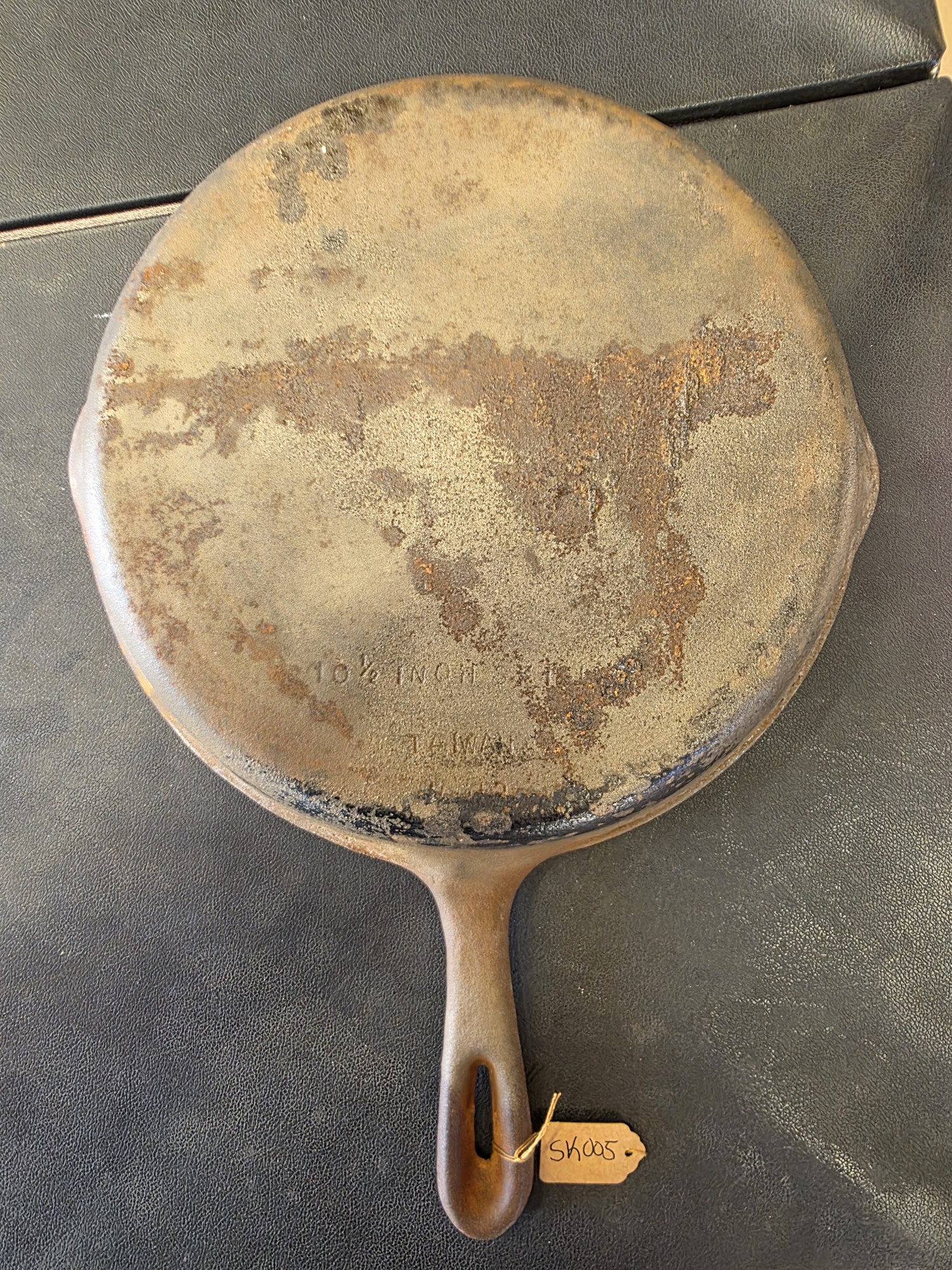
While working through inventory, I handled two Taiwan-made No. 8 skillets. One felt noticeably lightweight and had visible swirl marks. The other had a surprisingly smooth cooking surface. Both sat flat during my workbench check, and I didn't see cracks during that initial inspection.
The smoother one is reserved for a friend's housewarming gift. The other is marked as a sale candidate for after restoration and assessment. Neither decision required a famous American logo.
Those are intake observations. Cleaning can reveal things that old seasoning, rust, or buildup concealed, so neither pan gets a clean bill of health simply because I like how it looks today. But the gift decision says quite a bit about how I feel: an everyday pan can be something I'd be happy to put in a friend's kitchen.
Condition still gets a vote
Affordable doesn't mean I stop paying attention. I still want to know about cracks, movement on a flat surface, the cooking surface, and anything that remains after cleaning. A recognizable name doesn't cancel those questions, either.
A workbench check is a useful first observation, not a promise about performance on every cooktop. And pitting is missing metal, not something I can scrub back into existence. The finished description needs to explain the actual piece.
That's the standard I want across the workshop: give people enough honest information to choose the pan that suits them. Collectors may care deeply about a particular mark or casting. Someone furnishing a first apartment may care much more about what it costs and whether it fits their stove. Both are reasonable people to make room for.
There is room for both
I'm building Rundstrom Restorations to include heritage pieces, interesting collectibles, and affordable everyday cookware. I don't want someone to feel that cast iron is a club they can't afford to join.
I'm not announcing shop availability here; these pieces are still moving through the workshop. I'm explaining the direction: preserve what makes an old piece special, describe its condition honestly, and remember that useful cookware has value even when its name doesn't make anyone gasp.
Some pans belong in a collection. Some belong beside the stove, getting reached for on a Tuesday. I like the idea of helping with both.
Over to you
When choosing an everyday skillet, what matters most to you: price, weight, cooking surface, or the maker? Tell us in the comments below.
From the workshop
Before you strip that skillet…
Get our free Cast-Iron Rescue Checklist: what to inspect, which problems need treatment, and when to stop before the pan pays for your enthusiasm. Sign up below for an immediate PDF download and future workshop updates. Email delivery is not active yet.
Join the conversation
Questions, comments, questionable skillets?
Ask a question or tell us what you're working on. Comments are reviewed before appearing. Please leave personal contact details out.
Loading comments…