
Restoration stories
The Buckeye Cider Press That Almost Sold Before It Got Home
An antique Buckeye apple crusher and cider press, a milk run, and an offer Thomas wisely declined. Here’s the first look before its restoration.
By Kerri Rundstrom · Rundstrom Restorations · 5 min read
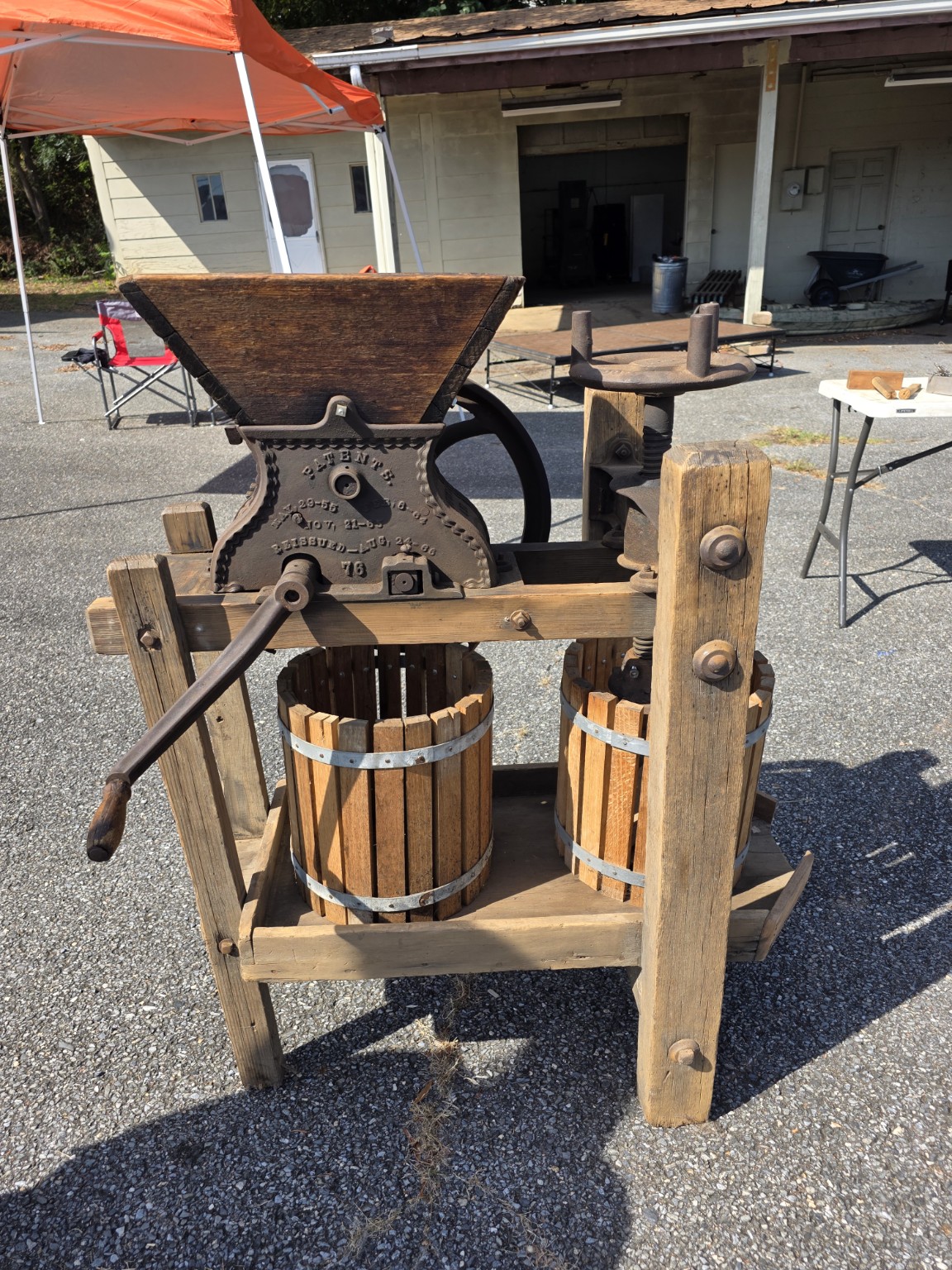
I sent my husband to pick up an antique cider press. He stopped for milk and nearly came home with a profit instead.
Let me back up.
I found the press, saw it in person, and started negotiating with the seller. Then I researched the weight: apparently around 300 pounds. That required a little more thought than tossing another skillet in the car.
I told the seller I’d let him know the next day. Naturally, I decided I wanted it. We struck a deal, I paid, and the following day Thomas went to collect it. The seller already had it on a dolly, so getting it onto our trailer turned out to be straightforward.
The unexpected complication was Food Lion.
Thomas stopped on the way home to get milk for our girls. A man in the parking lot spotted the press and offered him double what I’d just paid.
His response:
“My wife will kill me if this thing doesn’t at least make it home.”
A fair assessment.
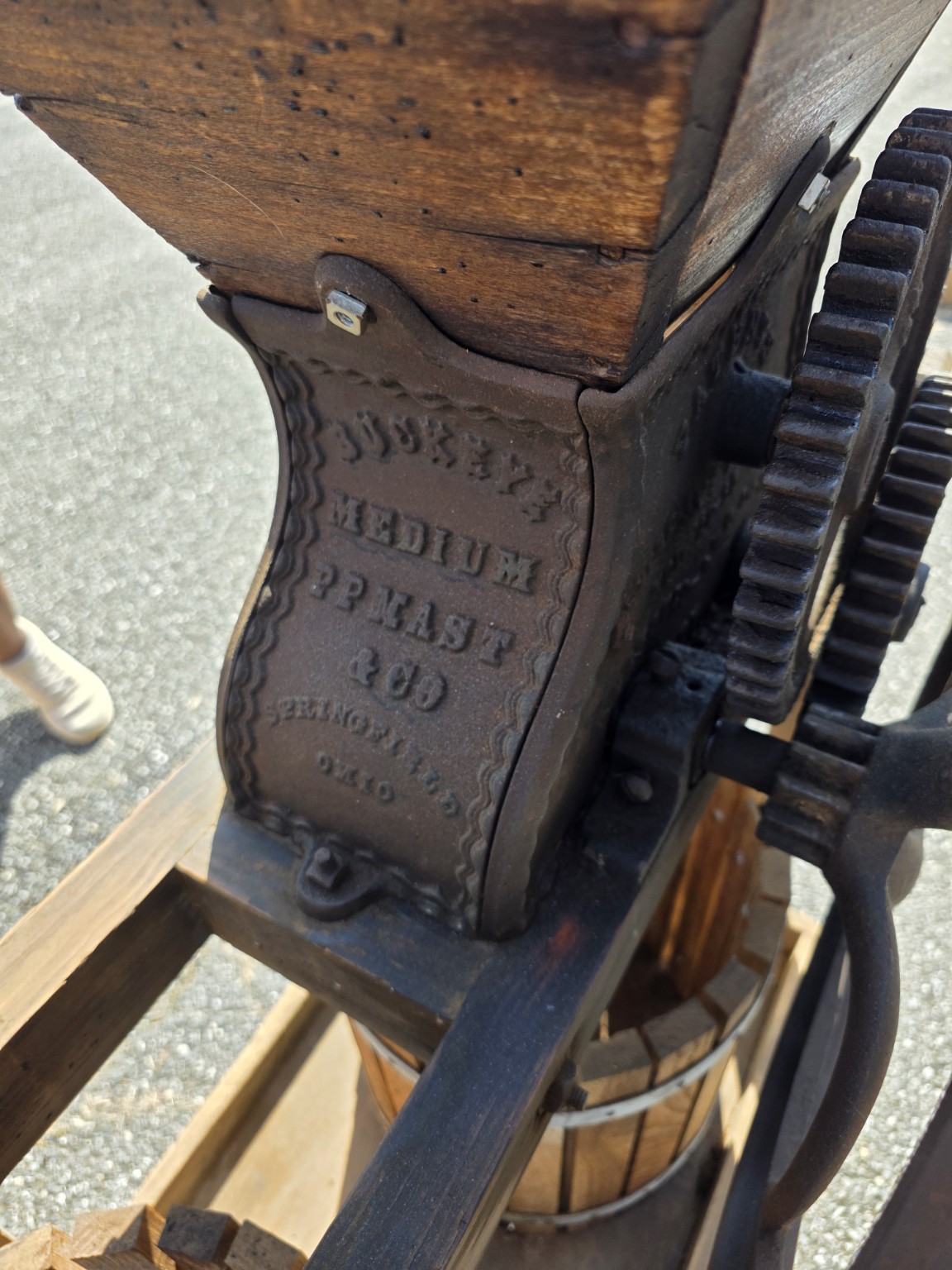
So the press made it home, and now our Buckeye Medium apple crusher and cider press, made by P.P. Mast & Co. of Springfield, Ohio, is officially a Rundstrom Restorations project.
It has already survived the first test: being left alone with my husband and an unsolicited cash offer.
Meet the Buckeye
This is a machine that gives you plenty to look at: a wooden hopper, a long hand crank, exposed gears, two slatted baskets, and a hefty screw press. Apparently it also makes an excellent conversation starter in a grocery-store parking lot.
The crusher breaks apples into pulp. The press squeezes the juice from that pulp. The two baskets sit beneath those separate parts of the machine.
One casting reads “BUCKEYE,” “MEDIUM,” and “P.P. MAST & CO.,” with “SPRINGFIELD, OHIO” below. The other carries patent markings, decorative borders, and a prominent “76.”
I love that even a machine built for crushing fruit got a little decoration. Somebody at the foundry understood that we were going to want to stare at it.
A little history behind all that iron
The Buckeye name takes us back to Springfield, Ohio, and the agricultural machinery business of John H. Thomas and P.P. Mast. Their partnership was making farm equipment, including Buckeye cider mills, during the 1850s. The Clark County Historical Society records that Mast bought out the business in 1871 and established P.P. Mast and Company.
These presses traveled. The Harcourt Valley Heritage & Tourist Centre in Australia holds a P.P. Mast Buckeye press catalogued as an 1880s example. Its records describe the Gaasch family using it from 1898, first for grapes and later for apples, over several generations.
That history belongs to the museum’s press, not ours. But it gives a lovely glimpse of the kind of working life a Buckeye could have: harvest after harvest, with another generation taking a turn.
Our machine’s exact manufacture year is still under research. The patent dates are clues to its design history, not a confirmed production date. And I’m leaving the meaning of that “76” open until we have evidence to explain it.
It has already found another volunteer
Kinsley has had a turn at the crusher handle, so we now have footage of the gearing moving before restoration.
I was excited about the old iron. She found the part you can turn.
The press came to us described as complete and functional. The videos document movement of the crusher mechanism; a full assessment of the machine is still ahead.
The two wooden baskets are faithful replacements rather than original baskets. That will stay part of the piece’s story when it is eventually offered for sale.
Clean and functional, with its history intact
The aged wood, cast lettering, and surviving details are part of why I wanted it. Cleaning and any necessary repairs should preserve those things.
We’ll assess the wood, iron, and moving parts individually, documenting the starting condition and the work each part actually needs. We also haven’t weighed our particular machine, so the approximately 300-pound figure remains a research estimate.
These photographs and videos give us our before record. As the work progresses, we’ll share what cleans up, what needs repair, and what we learn about this particular Buckeye.
Follow the restoration
The plan is to clean it, restore the parts that need attention, and preserve the character it has earned over the years. I’m not trying to make it look like it rolled out of the factory yesterday.
We’ll share the work as it progresses, then offer it for sale once the restoration and assessment are complete. If you’re interested, contact us through rundstromrestorations.com and mention the Buckeye Medium cider press.
Thomas has already demonstrated that it attracts buyers. Next time, I’d prefer to finish restoring it first.
Sources and further reading
Over to you
What part of this story reminded you of your own cast iron, and what would you like us to explore next? Tell us in the comments below.
From the workshop
Before you strip that skillet…
Get our free Cast-Iron Rescue Checklist: what to inspect, which problems need treatment, and when to stop before the pan pays for your enthusiasm. Sign up below for an immediate PDF download and future workshop updates. Email delivery is not active yet.
Join the conversation
Questions, comments, questionable skillets?
Ask a question or tell us what you're working on. Comments are reviewed before appearing. Please leave personal contact details out.
Loading comments…