
Workshop notes
Same Iron, Different Stage: Bare vs. Seasoned Cast Iron
Two vintage Lodge No. 3 skillets, one very obvious color difference, and no mystery paint involved.
By Kerri Rundstrom · Rundstrom Restorations · 3 min read
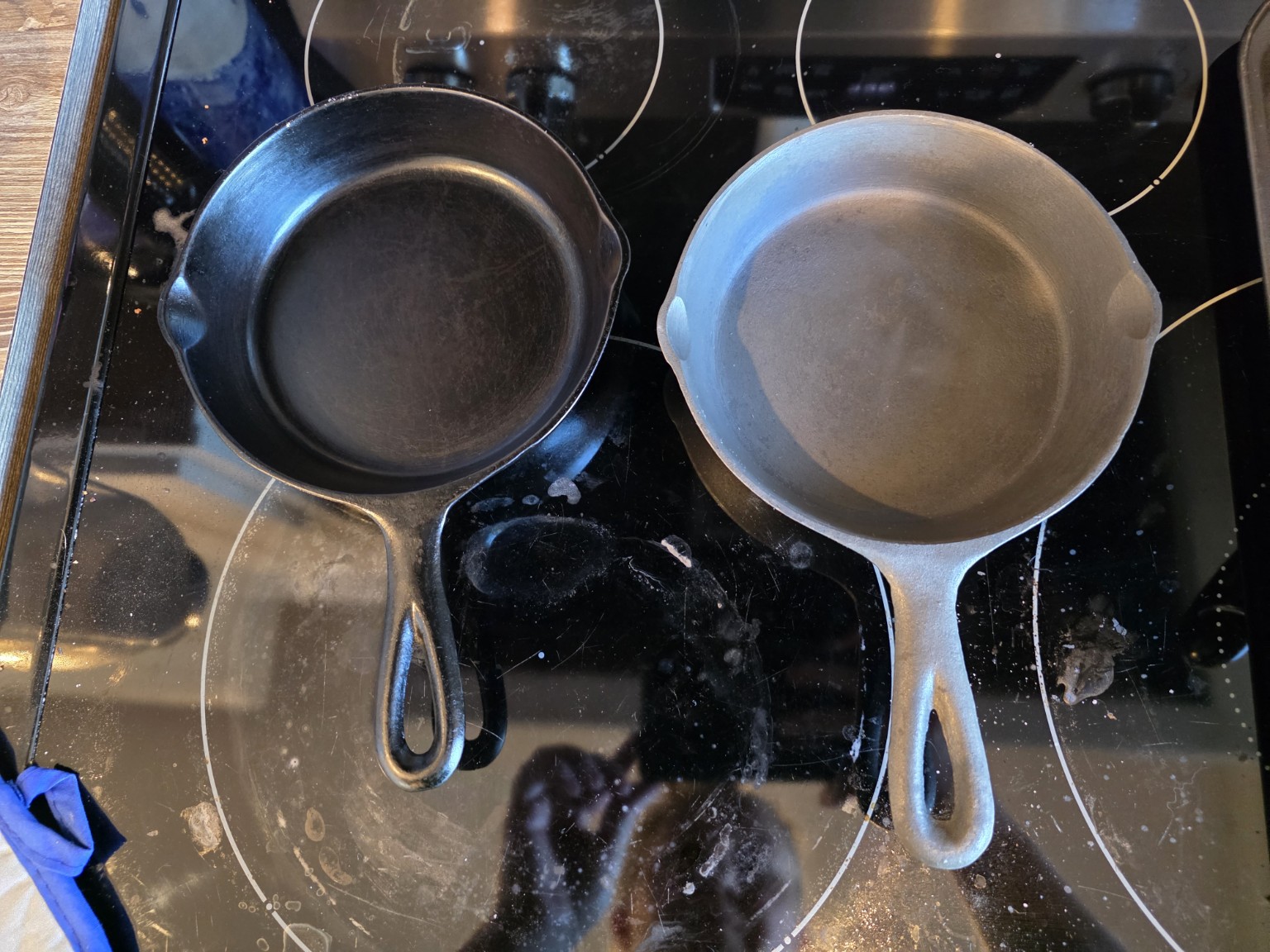
Where did all the black go?
If you have never seen a stripped cast-iron skillet, the pan on the right might look a little alarming. You expected black. Instead, you got gray. Congratulations: underneath the old finish, there was iron. The skillet has not forgotten how to be a skillet.
These are two vintage Lodge No. 3 skillets from my workshop. Both have been stripped. At one point, both looked like the gray pan on the right. The difference you see now is their seasoning stage.
What you are actually looking at
The one-notch Lodge on the left has been stripped and reseasoned. In these photos, it also has a light coat of my seasoning wax on it, ready for one more oven seasoning round. After that final round, it will be ready for sale. It is close, but I am not calling an uncooked coat of wax a completed seasoning layer.
The Lodge on the right has been stripped to bare iron and is ready for its first seasoning round. Its gray appearance shows the starting point before that new finish is built.
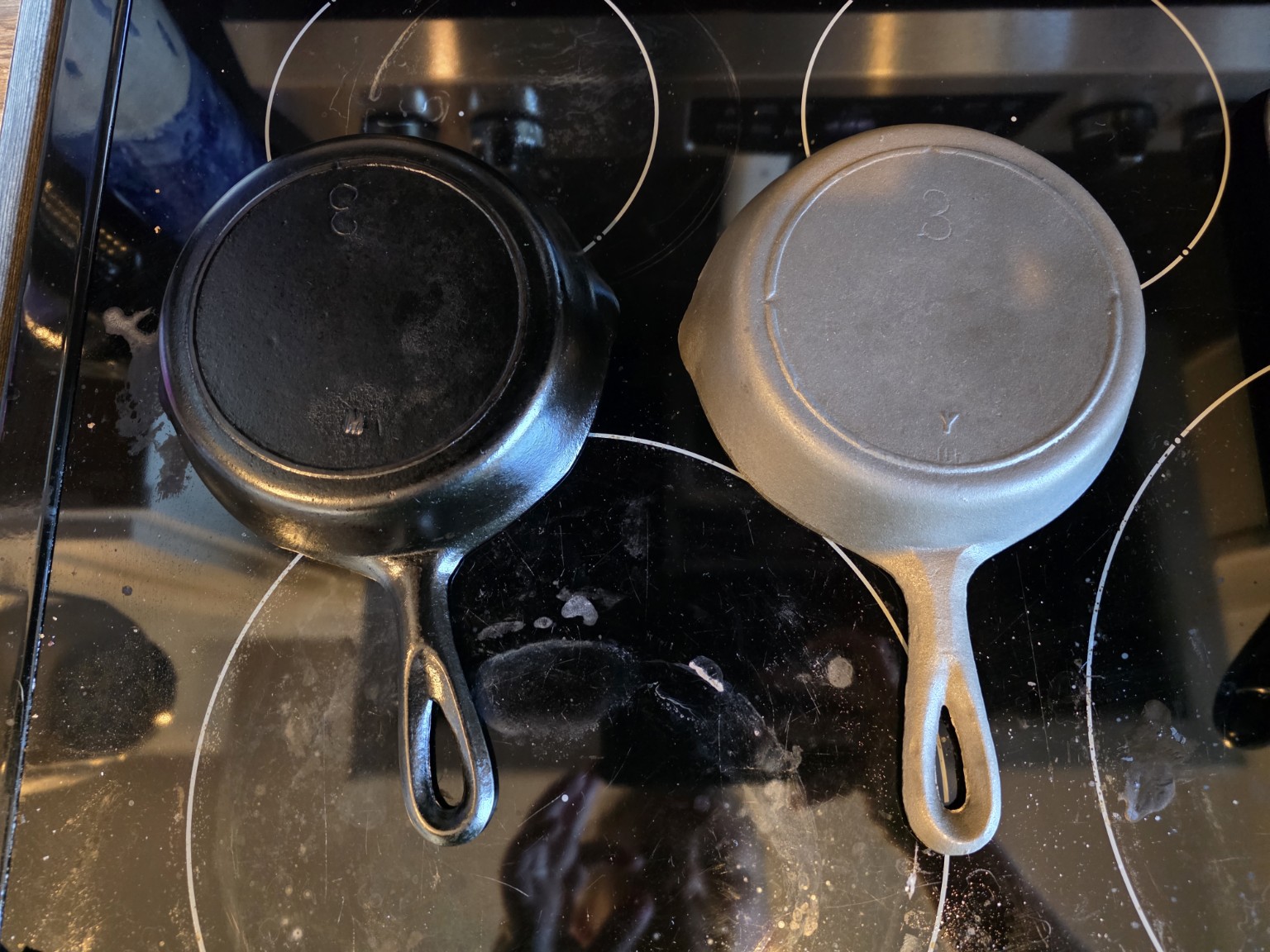
Turn them over and you can see their different heat-ring patterns and the same dramatic color contrast. They are two separate pans photographed together, not a matched before-and-after of one skillet.
Seasoning is a finish you build
Seasoning forms when a thin layer of suitable oil is heated and polymerizes into a coating on the iron. Lodge explains the process in its seasoning guide. It is different from simply rubbing oil or wax onto a cold pan.
The finish can deepen in color as seasoning develops. Early layers do not have to look perfectly black, and a photograph of a black pan cannot tell you everything about its cooking surface or condition. Lighting and that fresh coat of wax also affect the shine you see here.
For this comparison, the useful lesson is simple: gray bare iron and dark seasoned iron can be stages in the life of the same kind of cookware. Both of these pans started this part of their restoration journey looking like the right-hand skillet. One is just farther along.
The next step
The left pan gets its final seasoning round. The right gets its first. No finished reveal for the right-hand pan yet; that chapter still needs to happen.
If your own old skillet needs attention, you can request a restoration assessment. A gray starting point does not scare me. I have met the pan under the old seasoning.
Sources and further reading
Over to you
Have you ever stripped a skillet and wondered where all the black went? Tell us in the comments below.
From the workshop
Before you strip that skillet…
Get our free Cast-Iron Rescue Checklist: what to inspect, which problems need treatment, and when to stop before the pan pays for your enthusiasm. Sign up below for an immediate PDF download and future workshop updates. Email delivery is not active yet.
Join the conversation
Questions, comments, questionable skillets?
Ask a question or tell us what you're working on. Comments are reviewed before appearing. Please leave personal contact details out.
Loading comments…